
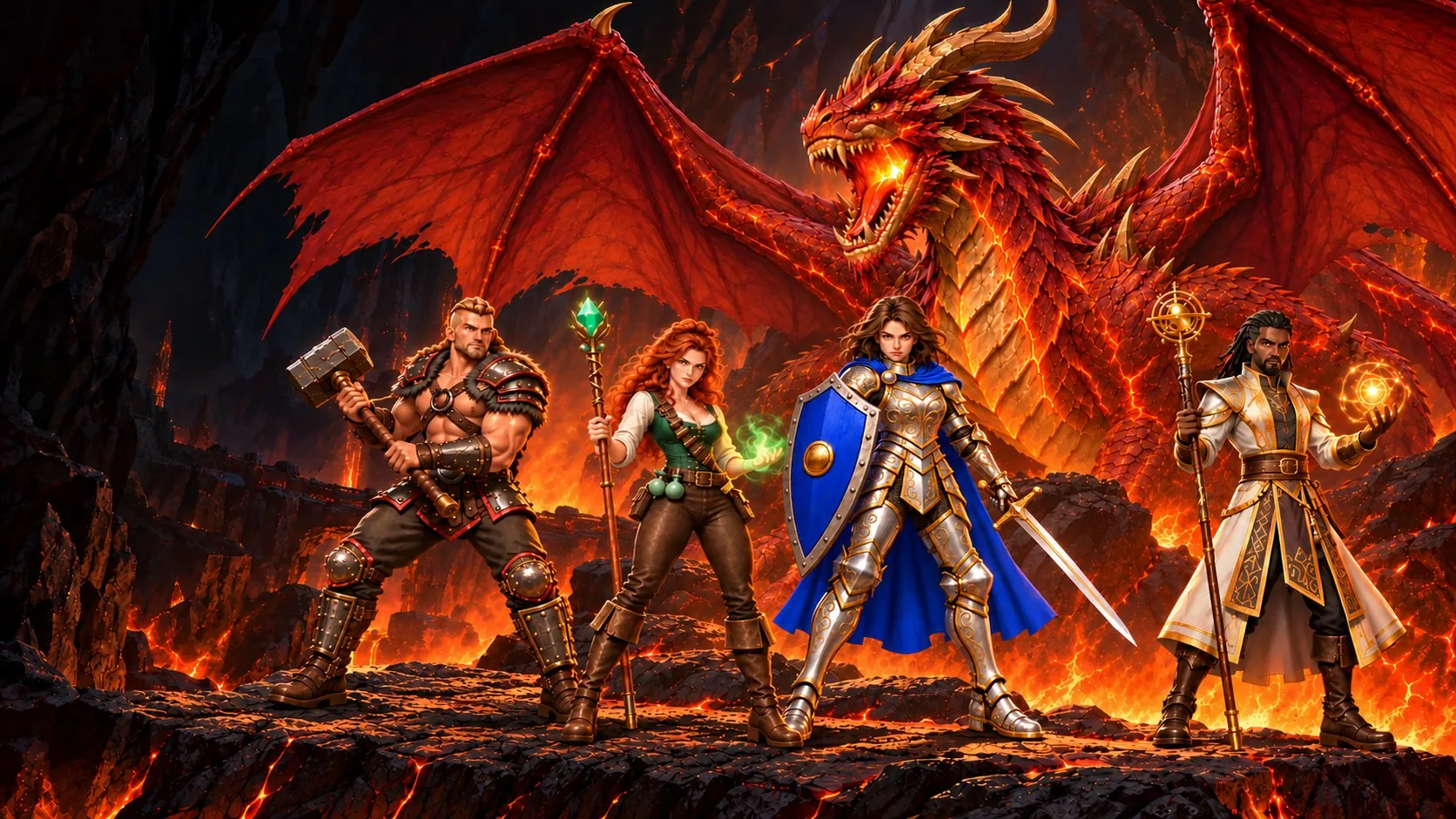

A fantasy about power, faith and human behavior
Twelve cities, the gift of the elements in the hands of a few, a flood, and a boy who survived it, became Intendant and promised the Great Sharing: the gift for everyone. A 12-year-old gets an adventure. Anyone who studies politics, neuroscience or history recognizes that what happens there happens in the real world.
The game at a glance
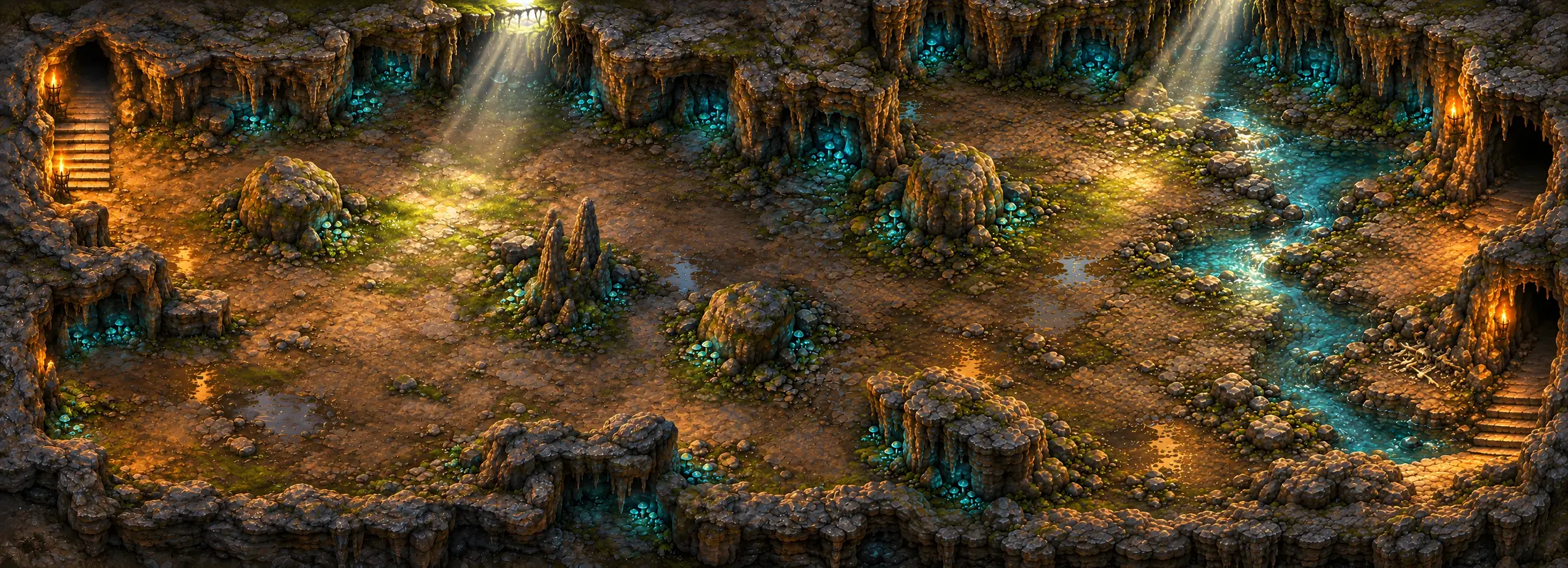
A turn-based tactical RPG for PC built on the open SRD 5.2 rules, with a party of four heroes with names and backstories, and a campaign in acts the size of one evening. The name is still a working title. The game isn't: the opening is already playable.
- Genre
- Turn-based tactical RPG, on a grid
- Rules
- SRD 5.2, the open tabletop RPG rules
- Party
- Four heroes per battle
- Players
- One (single player)
- Campaign
- In acts the size of one evening, with a beginning, a middle and an end
- Difficulty
- Explorer, Balanced and Tactical
- Where it runs
- PC, right in the browser
- Languages
- English and Brazilian Portuguese
- Stage
- Pre-alpha 0.1.1, with a free, open playtest
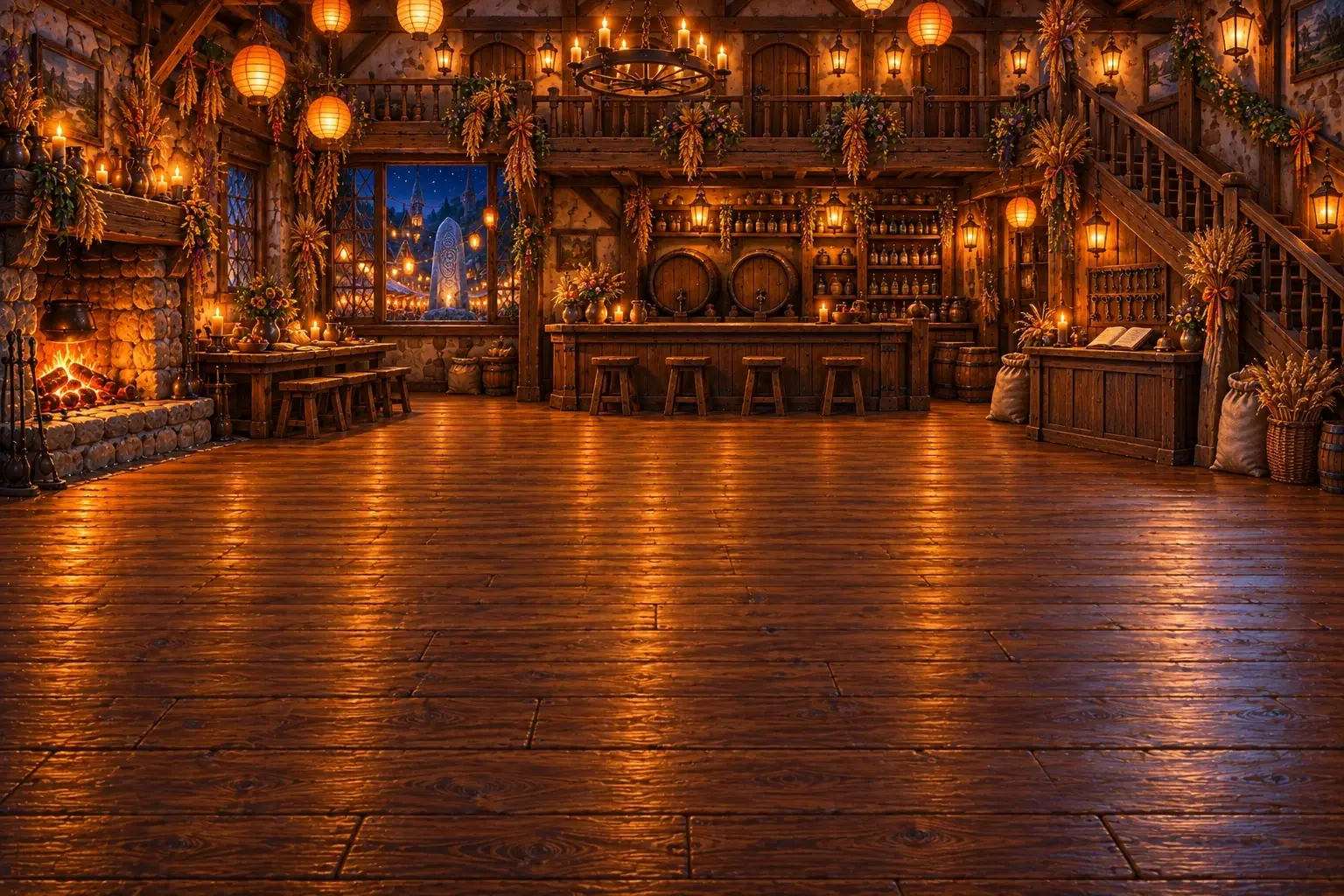
I lost my table too.
I was running tabletop RPGs at 12. I'd prep adventures in a notebook and get my friends around the table. Then adult life showed up: work, commitments, everyone on a different schedule. The weekly session became monthly, then yearly, until the day I stopped scheduling it at all.
The urge to play was still there, intact. What had changed was the calendar. So I decided to build a table that doesn't depend on it: the rules I already knew, a world I'd kept for years, and a campaign that waits for you until you have the time. And I'm building it together with the people who play it.
Twelve cities, and the gift in the hands of a few
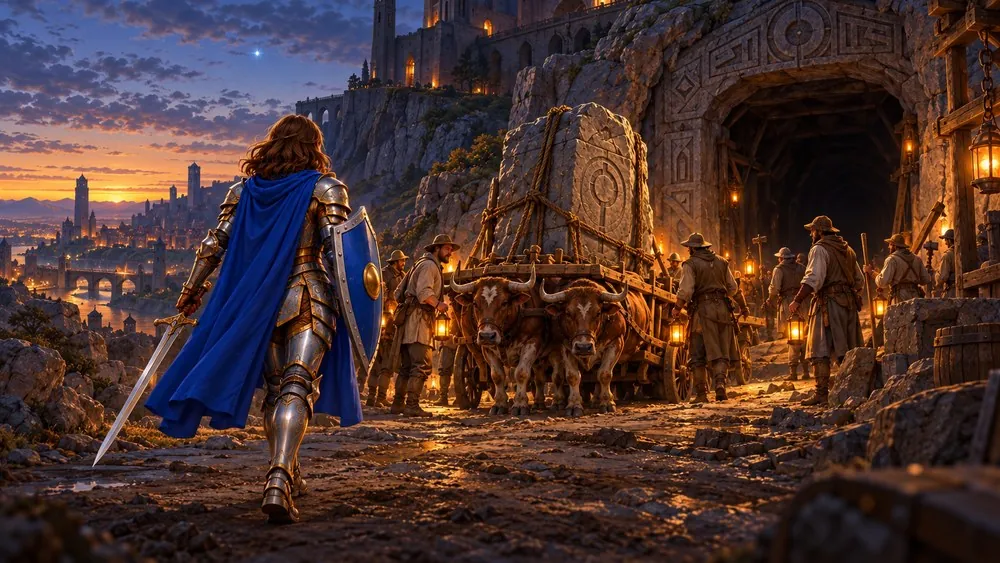
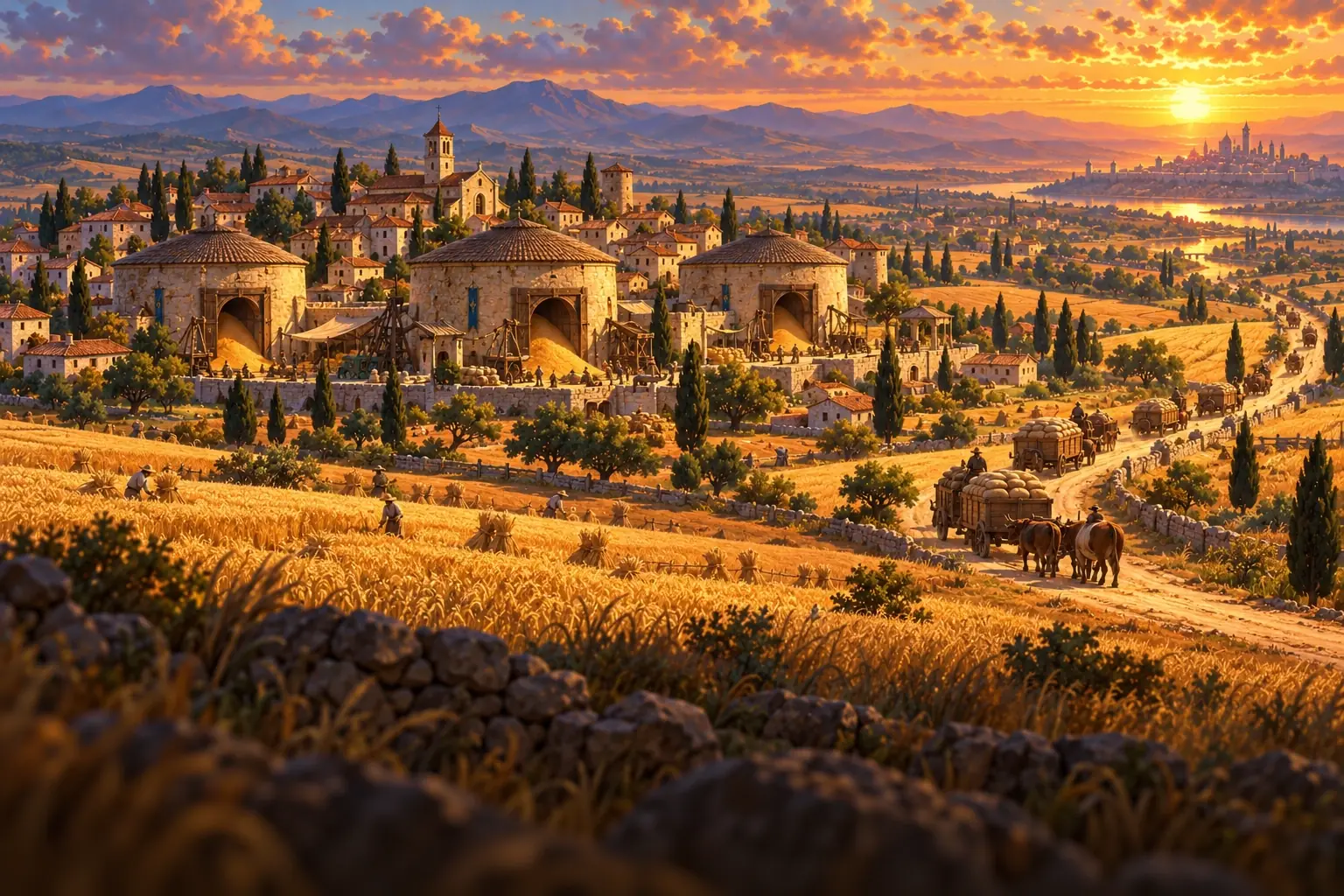
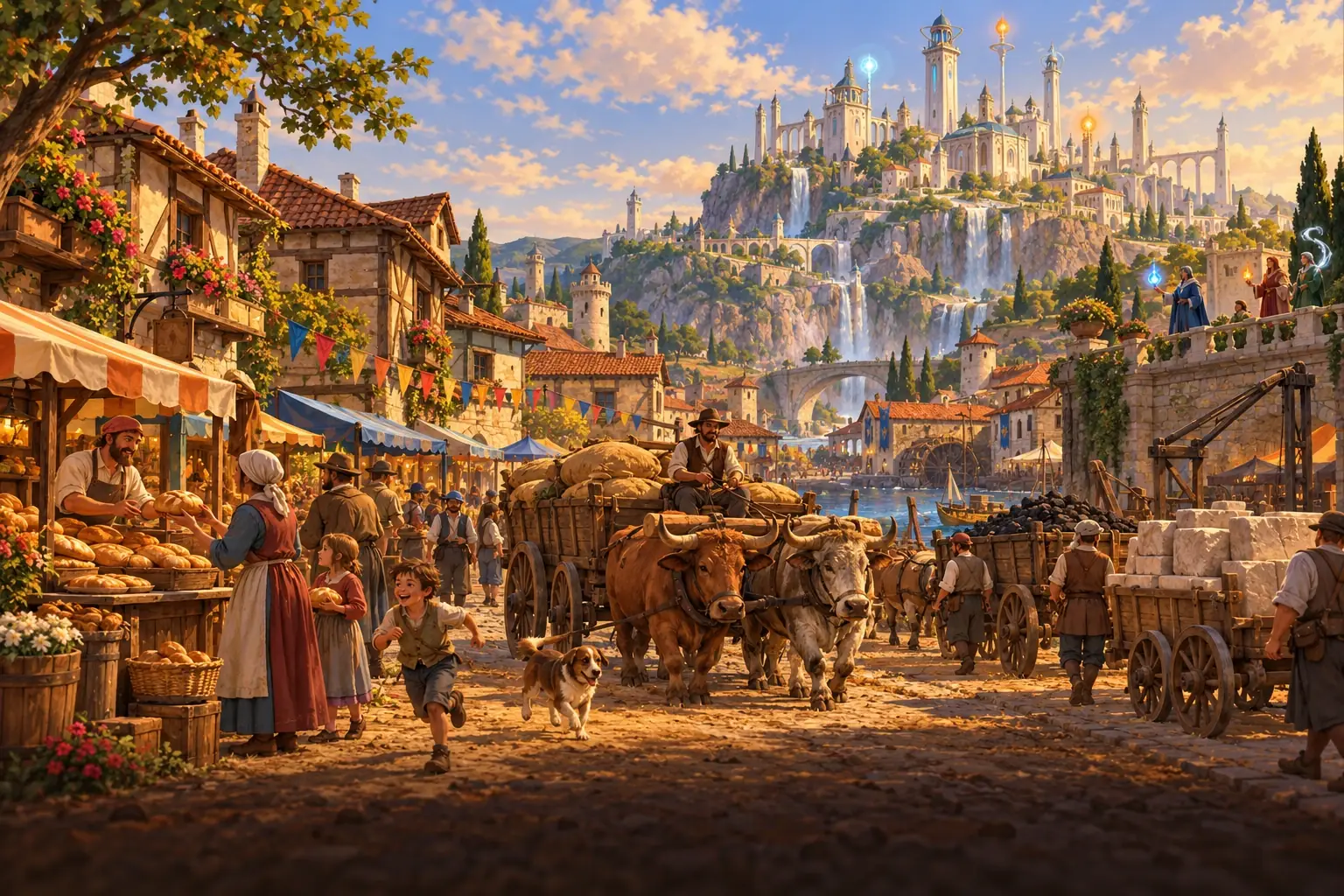
In this world, fire, water, earth, and wind are the currency, the weapon, and the faith. In four of the twelve cities, the gift to wield the elements is born to a chosen few, and the wealth stays with them. In the other eight, people born without the gift work for those four: in the fields, the mines, and the quarries.
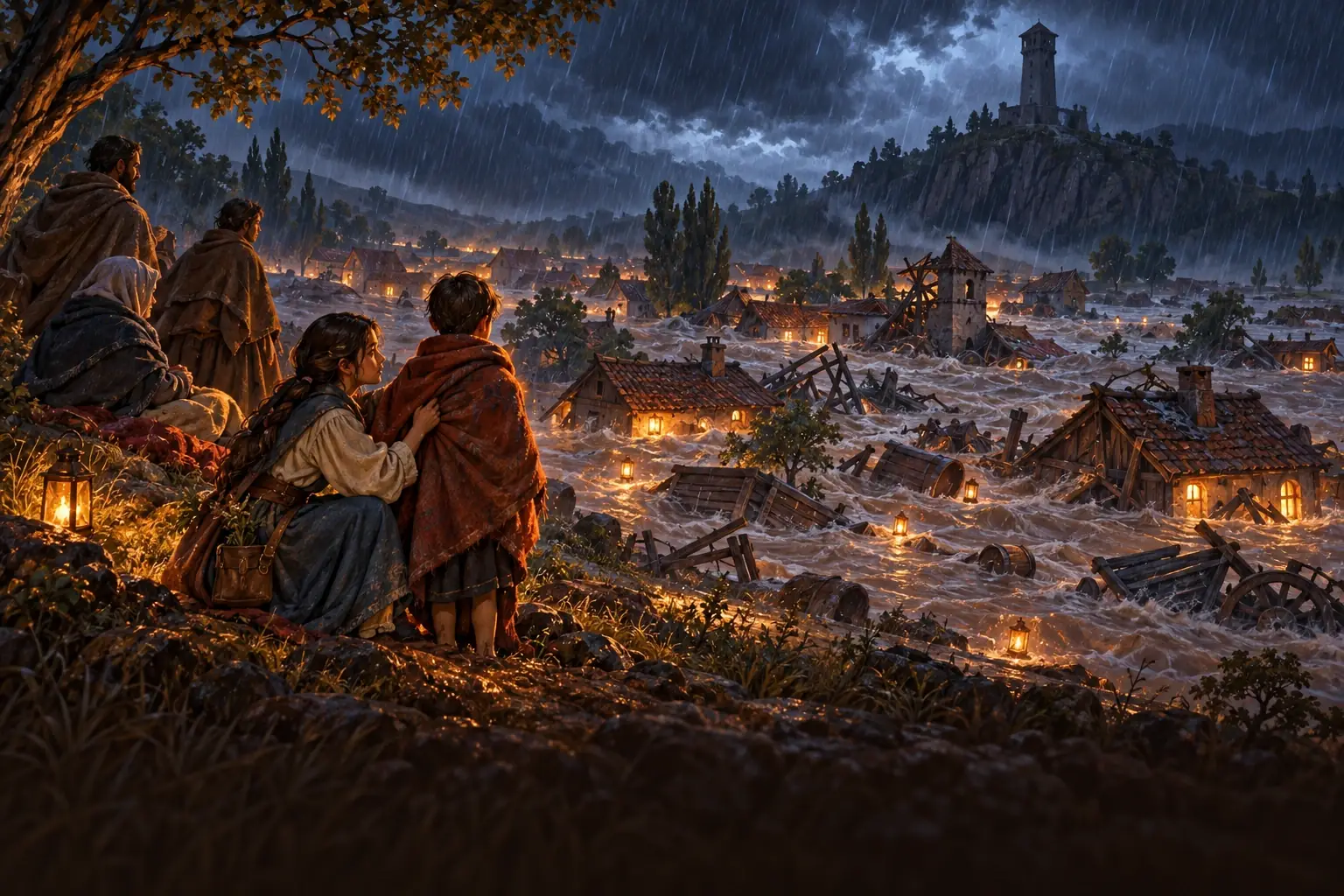
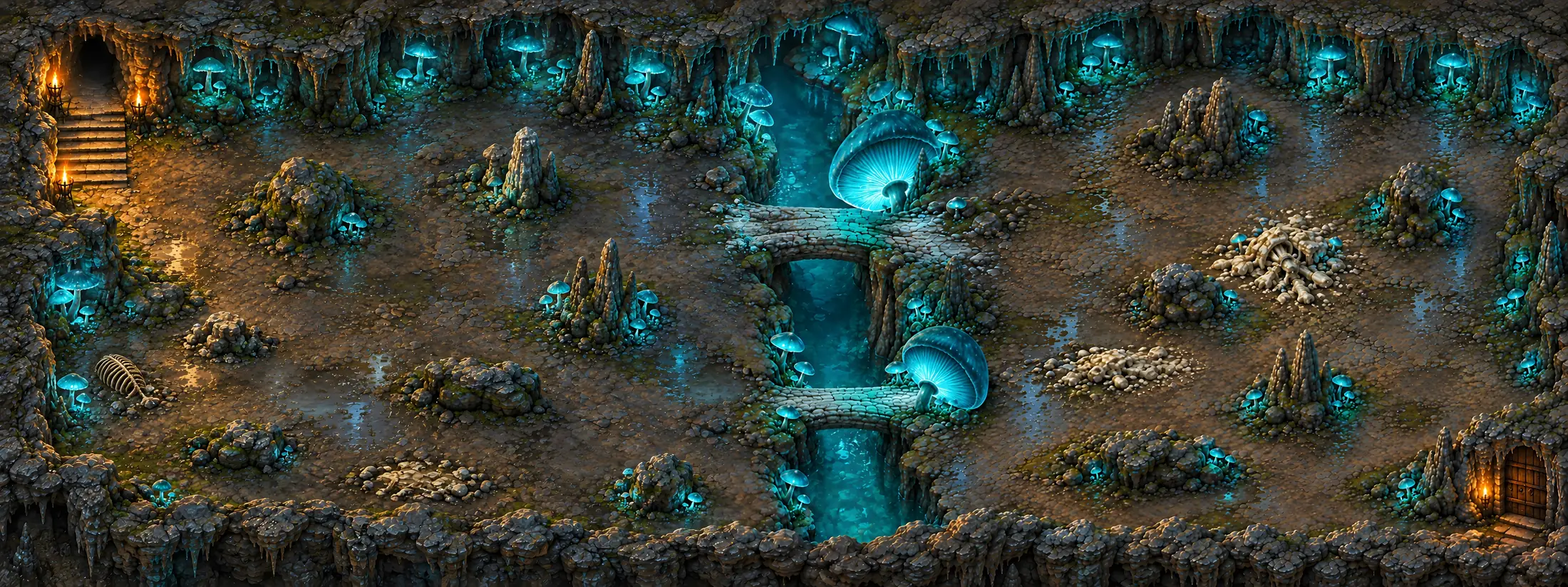
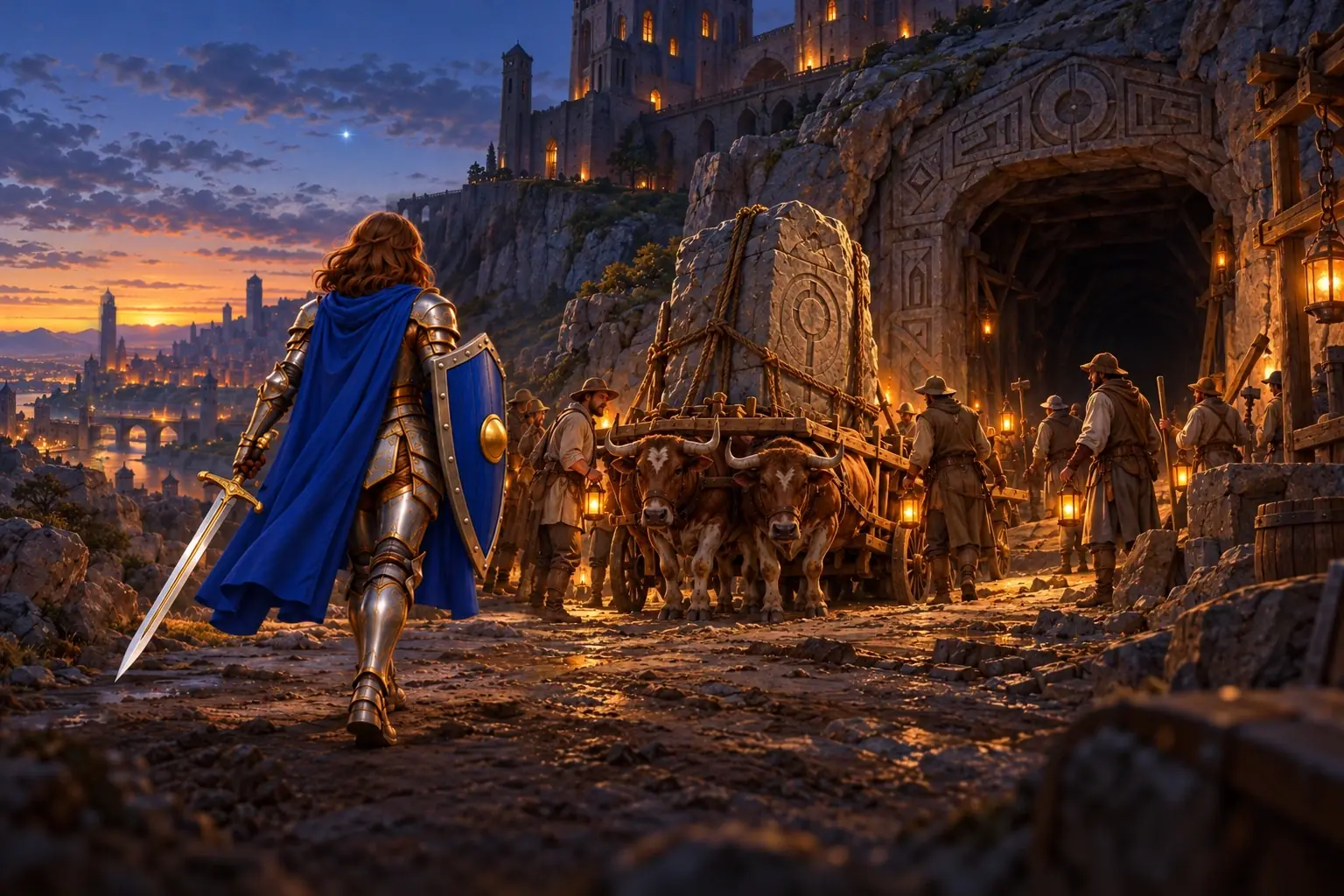
Eighteen years ago, a flood took an entire village. The order that guarded the roads fell apart, and the monsters returned to the tunnels of the ancients.
A boy who survived the flood grew up, was elected Intendant by a vote of seven to five, and made a promise: twelve anchors, linked in a network, to bring the gift to everyone. You command the party that clears the way to the first one, through tunnels sealed for forty years. A chronicler sent by the Council writes down everything that happens, exactly as it happens.
A 12-year-old will get a fantasy adventure. Someone into politics, faith, history, or human behavior will recognize, just beneath it, real questions: who decides what's fair, why so many people follow a promise without asking for proof, and what each of us does when the belief we had stops working. For both, the goal is the same: to finish the game thinking a little differently about why people do what they do.
Four heroes per battle, not an army
You start with these four. Others join along the campaign, each with their own class, backstory, and reason to be there. Tap each one to see what they do.
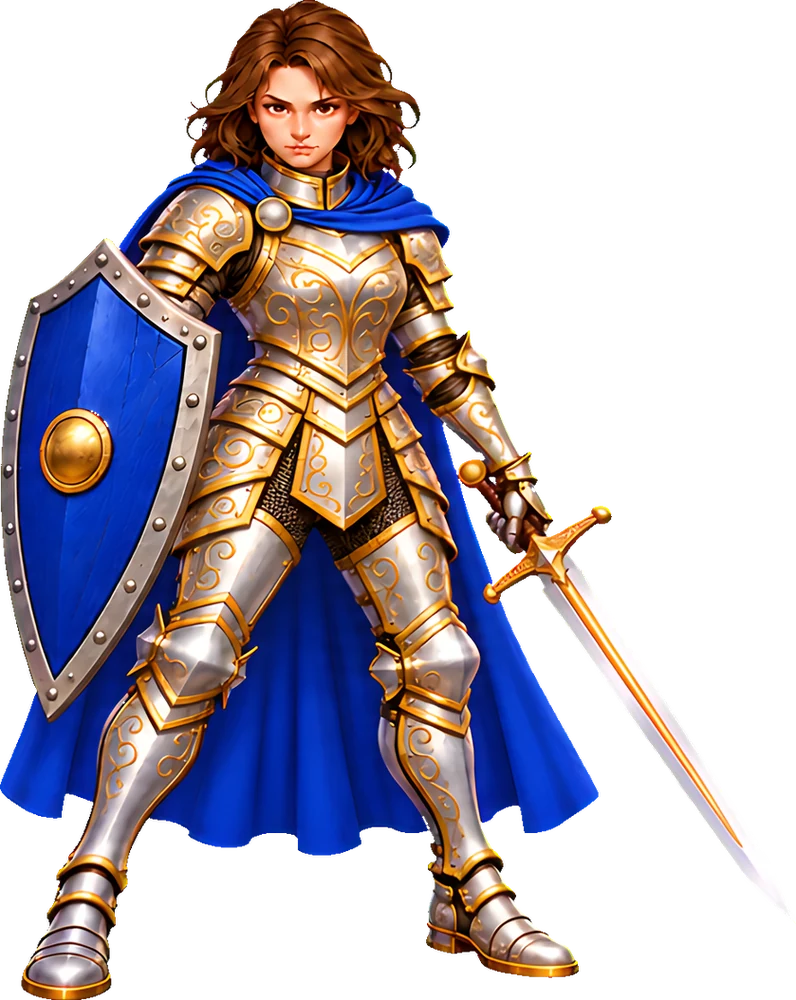
Maelis, the CaptainKeeps the shield and the oath
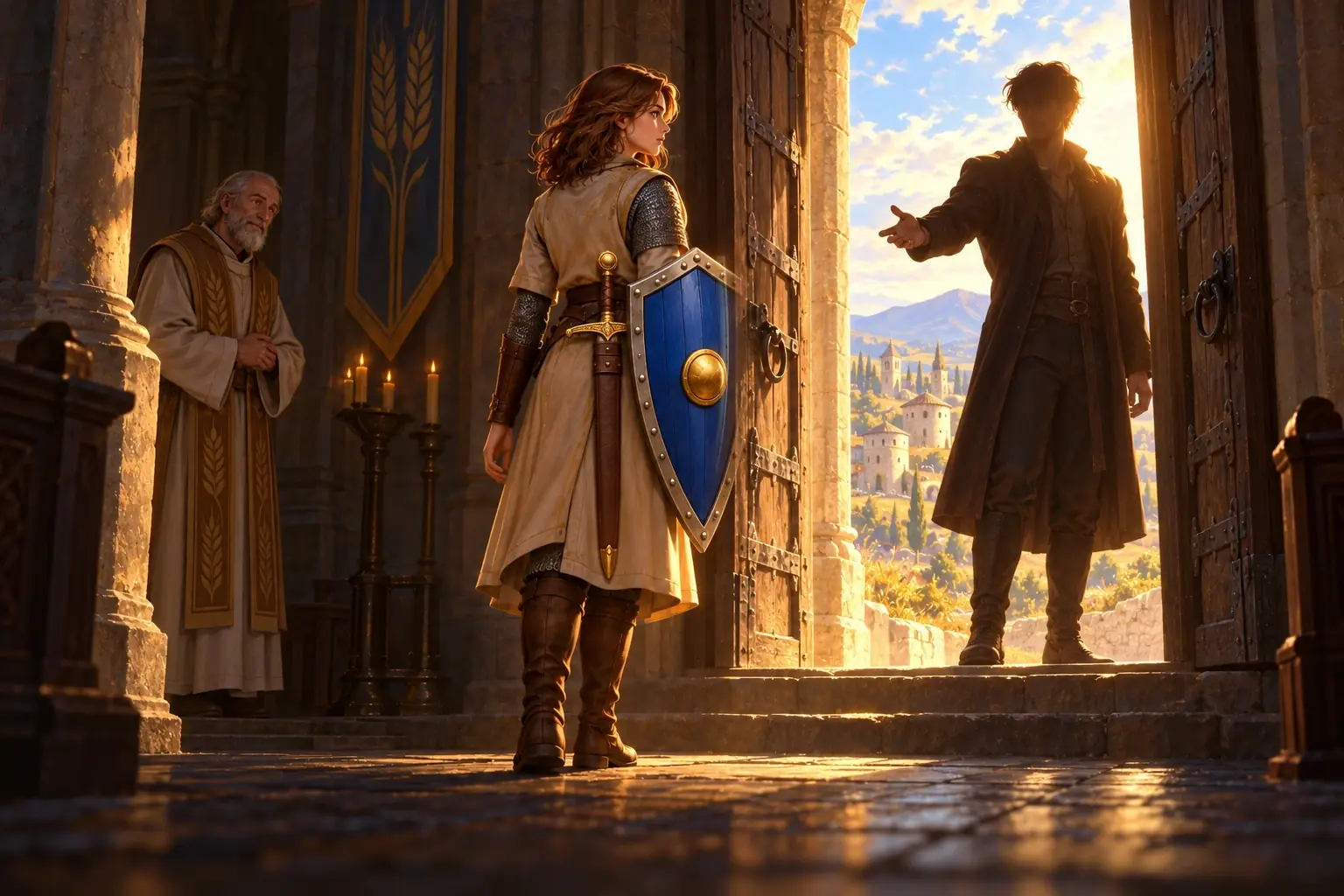
She grew up in Lorrevale, the grain city, and joined the order that guards the altar of the Temple of the Provider early: the best in the yard with a shield, the worst at keeping quiet. The winter the bread never reached those born without the gift, she heard the chaplain say the Provider provides for those who deserve it, saw who went hungry, and stopped listening to the chaplain. She keeps the shield and her oath to protect those who go without bread. She took the mission on the strength of one sentence: tomorrow the gift reaches everyone, and it won't depend on deserving it.
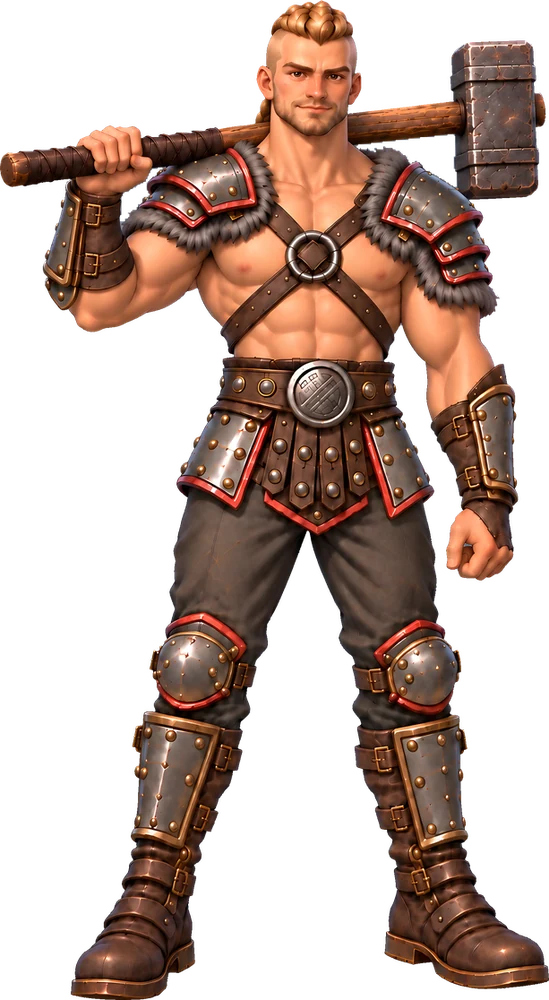
Kolvar, the BelieverHolds the front line
He hauled coal along the road of the twelve cities for twenty years, sack on his back, from the mines to the forges of the gifted cities: the fire belonged to others, the weight was his. The day the Intendant climbed the square and said there's too much gift in a few hands and too little bread in many, Kolvar dropped the sack and stayed. That's why they call him the Believer: he believes in the Intendant the way you believe in rain. He can't read a map or a prayer. He can hold the front line and protect the party, and when twenty years of rage come up, the warhammer does the rest.
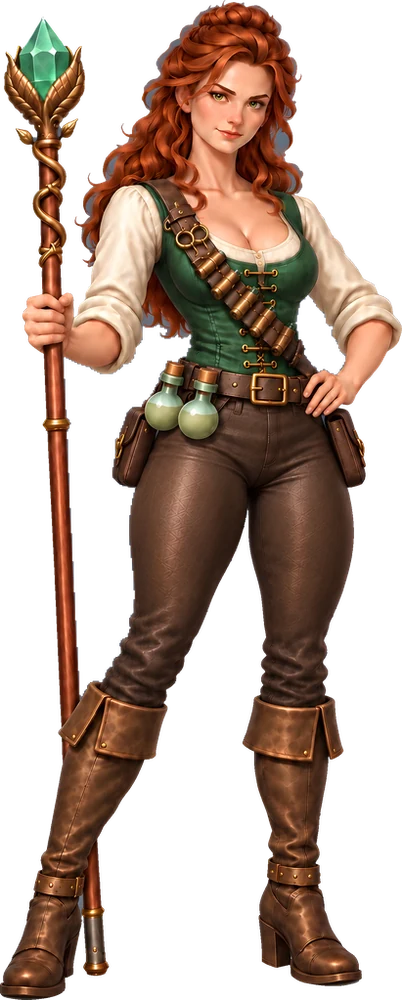
Merewen, the HealerCares for the ones carrying the promise
She served at the hot springs in the hills, the place people go to heal what work breaks, and learned more there than the prayers: the hands that close a cut, set a bone, and sit beside someone who's afraid. When the flood took an entire village, the survivors came to the hot springs, and among them was a nine-year-old boy who didn't speak. She looked after him for a year, until he said his own name. Today that boy governs the twelve cities. She joined the party because, if the promise is to care for everyone, someone has to care for the ones carrying it.
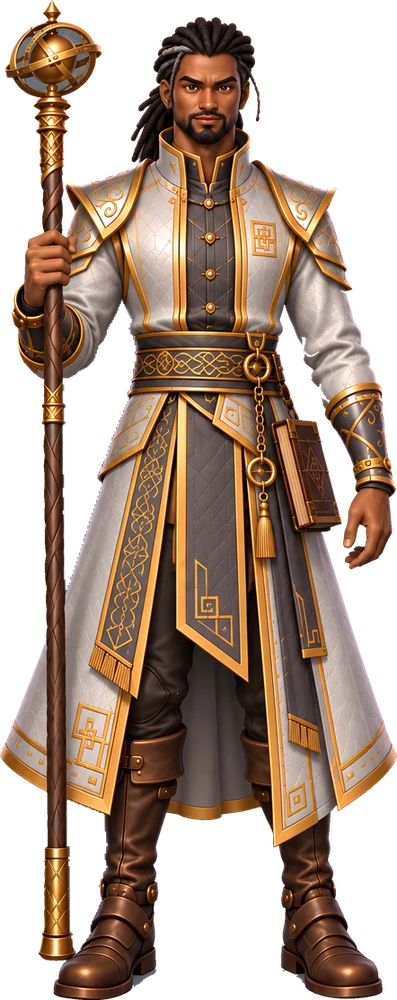
Edrimon, the EngineerReads the marks on the walls
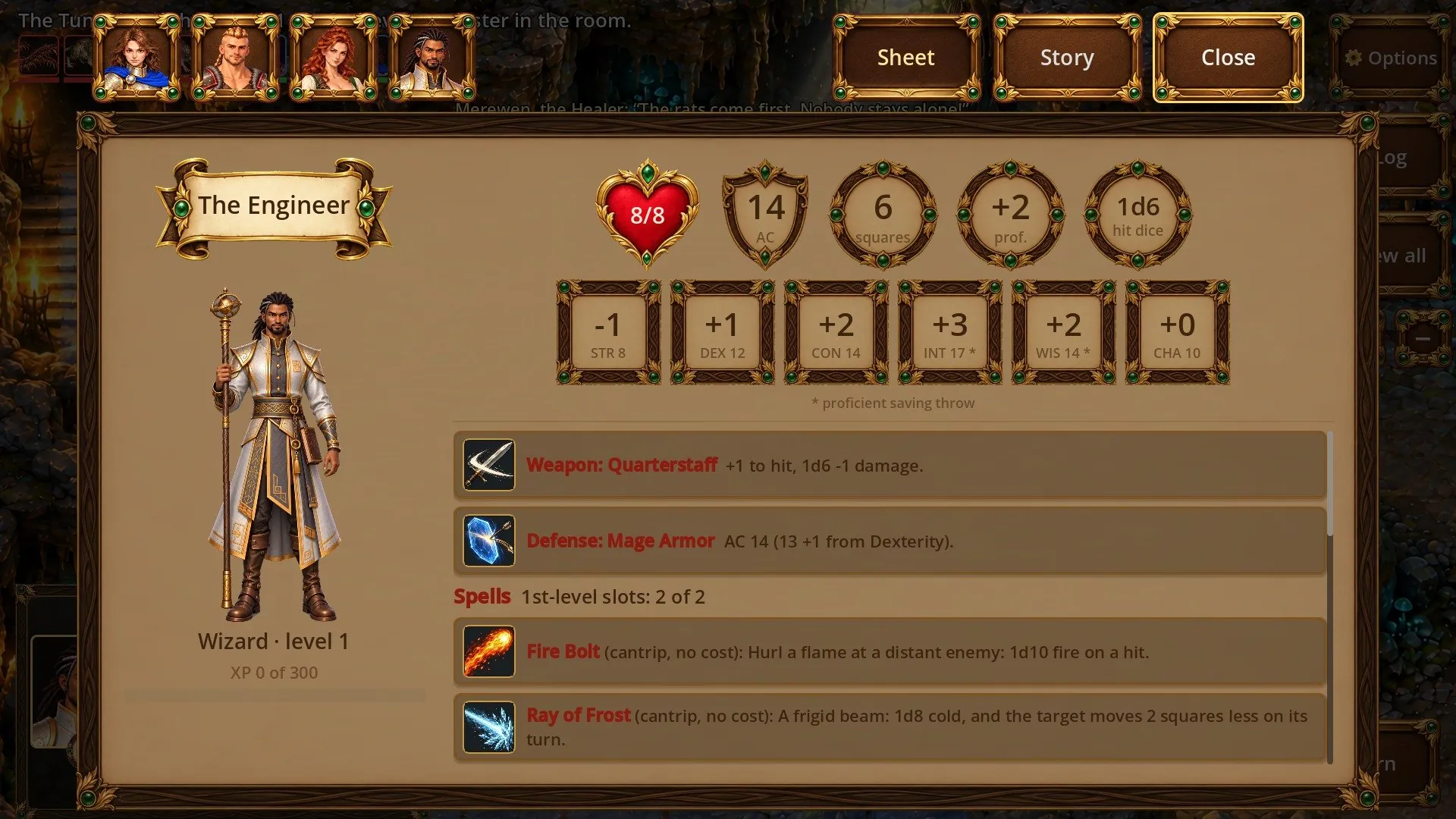
He spent his life in the archive of Ostremar, copying the drawings of the ancient builders: the tunnels that link the cities underground and the stones they raised at the end of each one. Nobody has raised a stone that size in forty years, and he's the only one who knows how. His master was among the last builders, came back silent, and died silent. Edrimon reads the marks on the walls like a book, studies magic from the old books the way he studies everything, slowly and by measure, and goes down to find the answer his master never gave.
Nobody in the party is a villain. Each of them believes in something, and the campaign is what happens when those beliefs are put to the test.
The heroes' names are still working names.
The tabletop rules, in a session the size of your evening
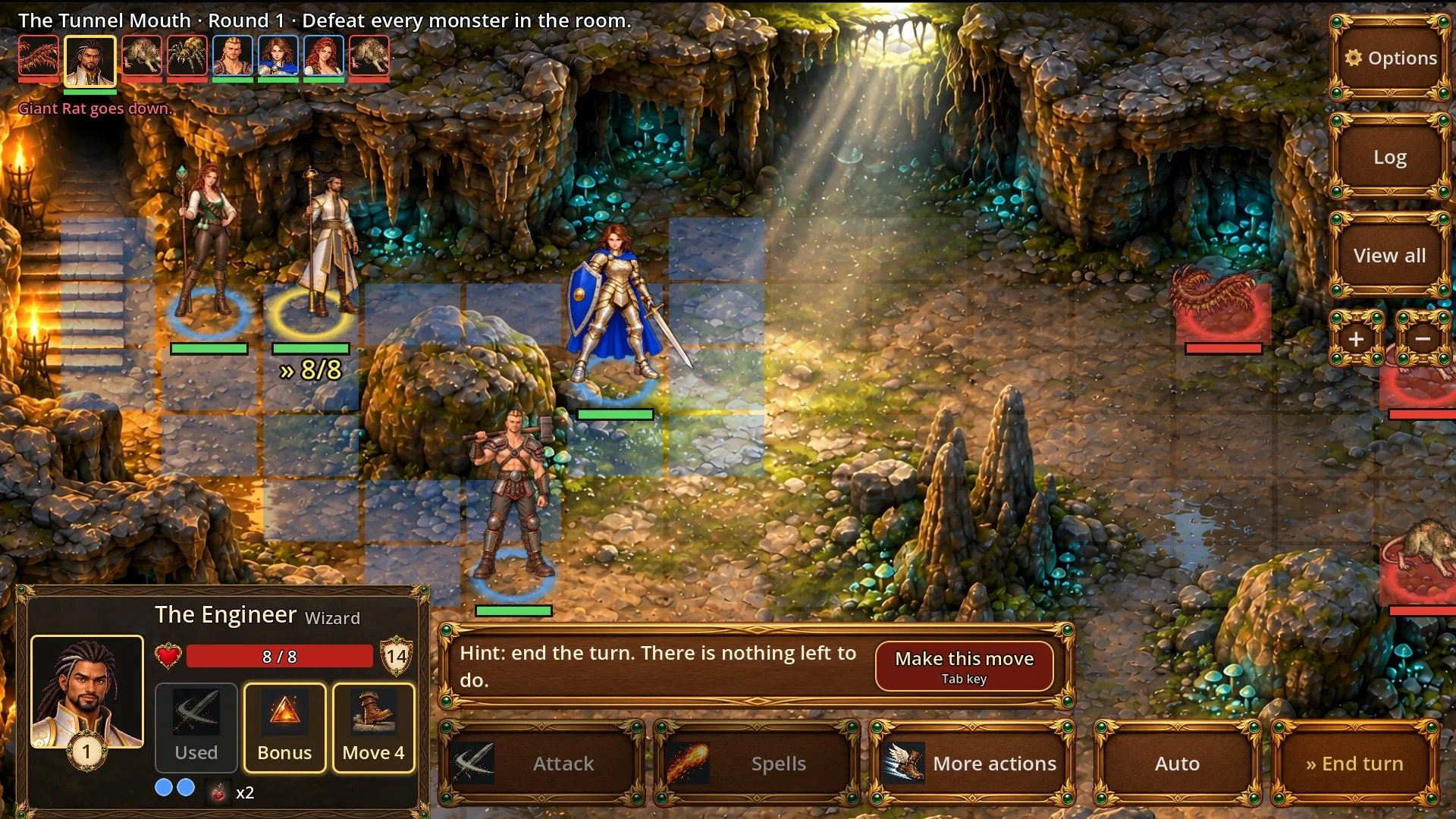
The SRD 5.2 rules, the open foundation of the rules millions of tabletop groups play by, ready on screen: the same classes, the same spells, the same d20. Every attack shows the math: the die, the modifier, and the result. If you've ever sat at a table, you'll recognize everything in the first battle. If you never have, you learn by watching. Nobody has to prep a session or be the Game Master.
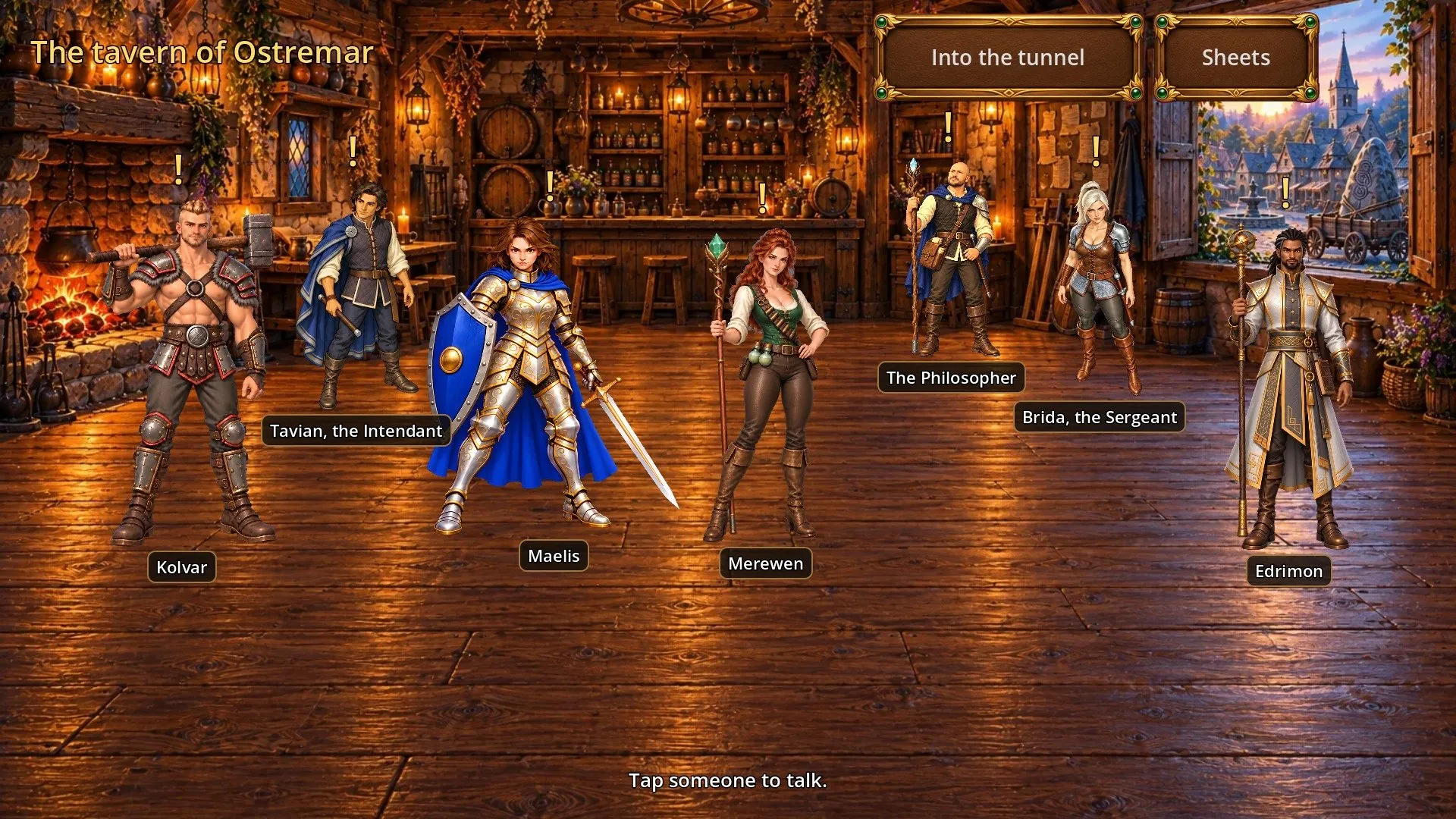
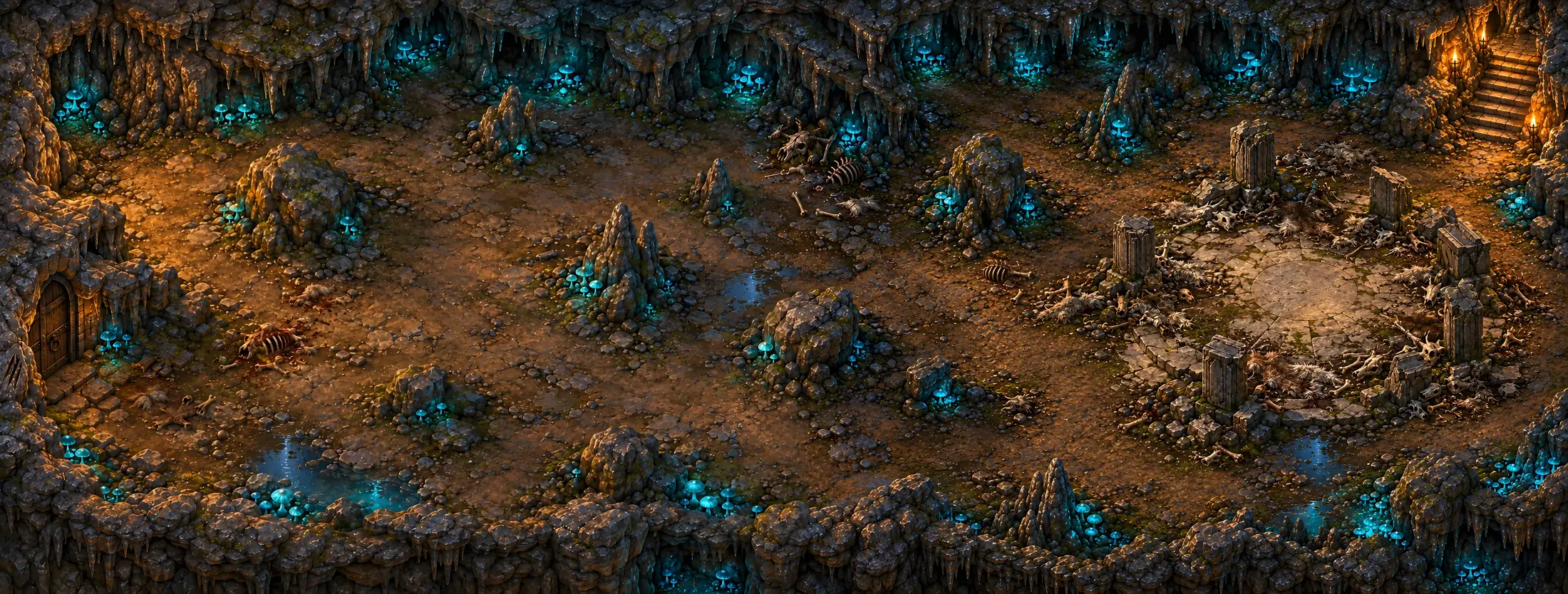
Each act is a dungeon, with a short rest between battles and a tavern at the end, where the party rests, talks, and levels up. One act fits between dinner and bedtime. Stop at the tavern on a Tuesday and pick it up on Saturday, exactly where the party left off. Or push straight on to the next dungeon, if the night allows.
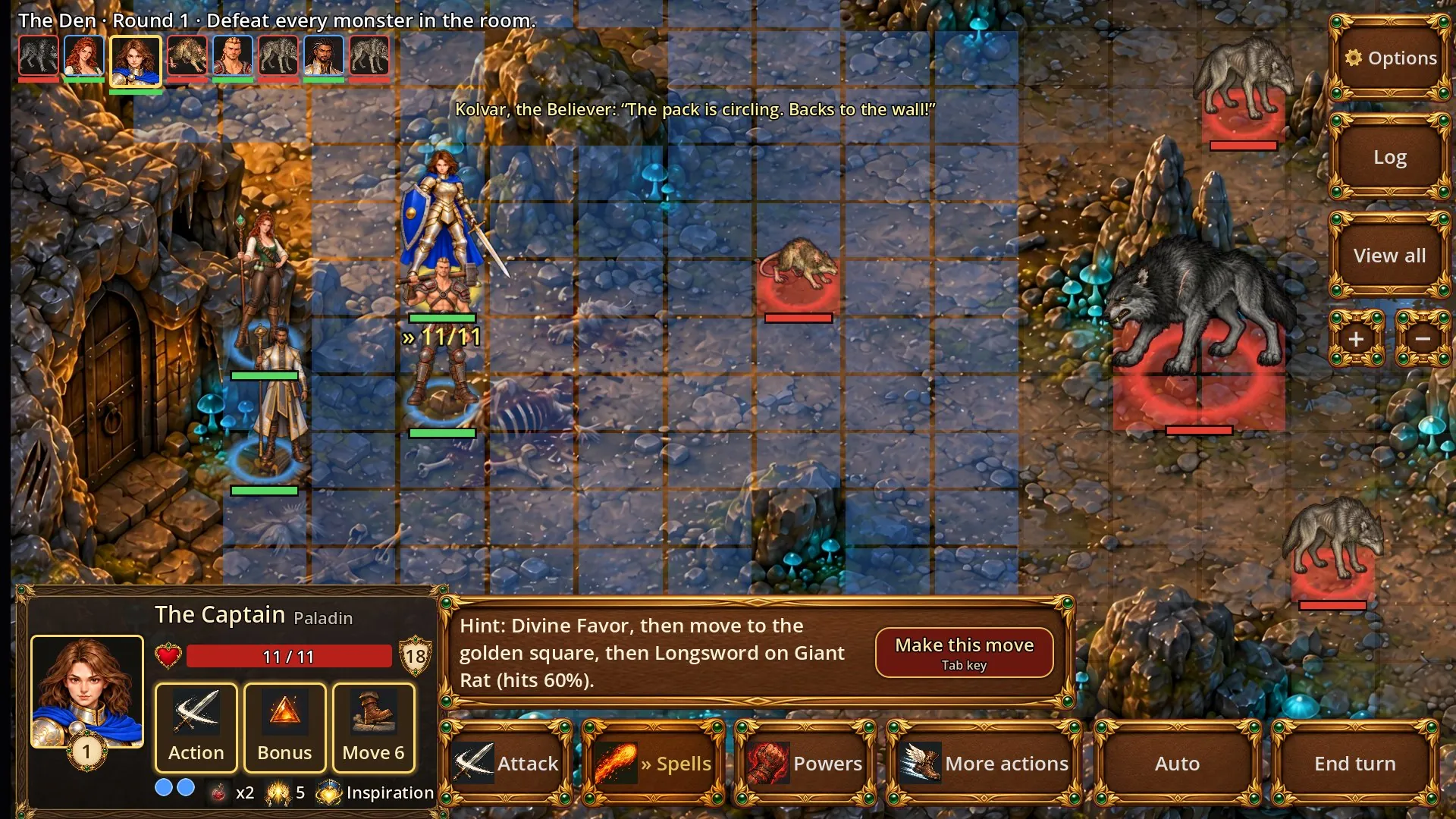
You start with four heroes. Along the campaign, others join the party, each with their own class, backstory, and reason to be there. In every battle, you pick four and build the party your way: two shields and two casters, a full front line, or only those who cast from range. You decide. On the grid, position, terrain, and cover matter as much as the dice: flank, protect the mage, save your strongest spell for the next room.
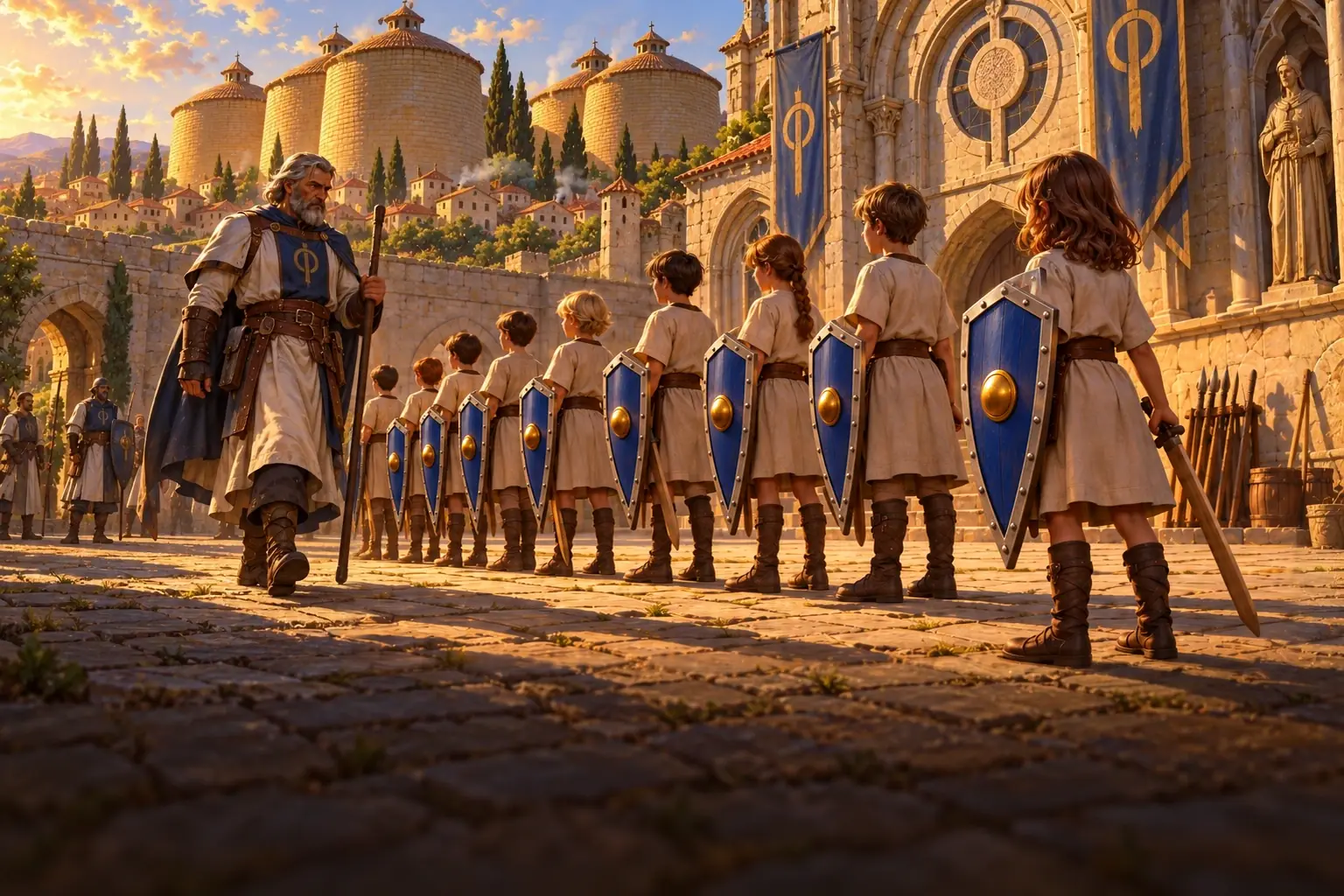
The campaign has a beginning, a middle and an end: every victory pushes the story toward its close. It's built to be finished by people with full schedules, and the full length will be stated before you buy anything.
Three difficulty levels, three ways to play
Replay the campaign on another difficulty at no extra cost.
 Explorer
For those who want to live the story.
 Balanced
The table as it is, with the SRD 5.2 rules played straight.
 Tactical
For those who want every decision on a knife's edge.
What's in 0.1.1, and what's still missing
Legends SRD Tactics is in pre-alpha: the stage where the game runs and you can play the opening, but systems, art, and sound are still incomplete. Version 0.1.1 is the open playtest, a test with real players.
What's in: about 15 minutes of gameplay, right in your PC browser, with mouse and keyboard. Complete combat, across all three difficulty levels. Each hero's character sheet. The first steps of the story.
What's missing: final art, sound, balance, the acts that follow, and the tavern as it will be. The game isn't in any store yet, and there's no early access yet.
I opened the playtest this early on purpose. The people playing now help decide what goes into the next version. Every new version ships with what went in, what came out, and what players asked for, documented on the devlog.
Frequently asked questions
Do I need to know the tabletop rules to play?
No. Explorer difficulty lets you take the story at your own pace, and every roll shows up on screen with the math done: the die, the modifier, and the result. If you already play tabletop, you'll recognize everything in the first battle. If you're new, you learn by playing.
I've played Baldur's Gate 3. An indie game is going to feel smaller.
It will feel smaller, and it is. Baldur's Gate 3 is one of the most awarded games ever made, with hundreds of people and years of production; comparing the two as equals wouldn't be fair to either. What Legends SRD Tactics offers is a different experience: the same tabletop rules, played straight like at the table, a campaign that fits in your month, and an original story. If it was the turn-based combat and the rules that hooked you there, you'll find them here again, in an indie game.
Indie RPGs usually have weak stories.
The story is this game's priority, and it was the first part of it: dozens of pages written before any code, covering the twelve cities, the flood, the promise of the anchors, and how the campaign ends. It's about power, faith, and what people do when their belief stops working, and no hero is a villain: each one has a reason, and you'll come to understand all of them. The art and sound will evolve until launch. The story is already decided, and it's what I most want you to take away from the game.
How long is the campaign, and does it have a real ending?
It does. The campaign is built to be finished by people with full schedules: acts the size of one evening, with a beginning, a middle, and an end. The full length will be stated before you buy anything. Right now, the 0.1.1 playtest runs about 15 minutes.
Is a one-person studio really going to finish this game?
Today the studio is one person, and this is just the beginning. The scope was locked from day one: a campaign in acts, with the ending written before the first line of code, and version 0.1.1 already runs in your browser. And the game isn't made alone: the community of Game Masters and RPG players testing every version is the studio's greatest strength. Every new version ships with what went in, what came out, and what they asked for, documented on the devlog.
When does the full version come out, and how much will it cost?
The date and the price come when the game is ready for them. Until then, the opening stays free in your browser, and anyone who leaves their email below hears first.
Which languages? Will it run on a basic laptop?
English and Brazilian Portuguese. And you don't need a gaming PC: the game is 2D, made in Godot, and designed to run on an ordinary computer, laptops included. The playtest already runs right in your browser. Minimum requirements will be out before launch.
Does the game use AI?
I do. AI does the execution and I direct it: it handles the heavy lifting in programming, in Godot, and in the art, and I decide what goes in, what's fun, what gets cut and what has to be redone. The world, the characters, and the story are mine, created and written by me. The art follows my direction, detail by detail, and I ask for changes until it looks the way I want. The free playtest lets you judge for yourself before paying.
The next act depends on what you tell me

Played it? Tell me what worked, where you got stuck, and what you want to see in the next versions. I read every comment, and if you leave your contact info, I'll get back to you.
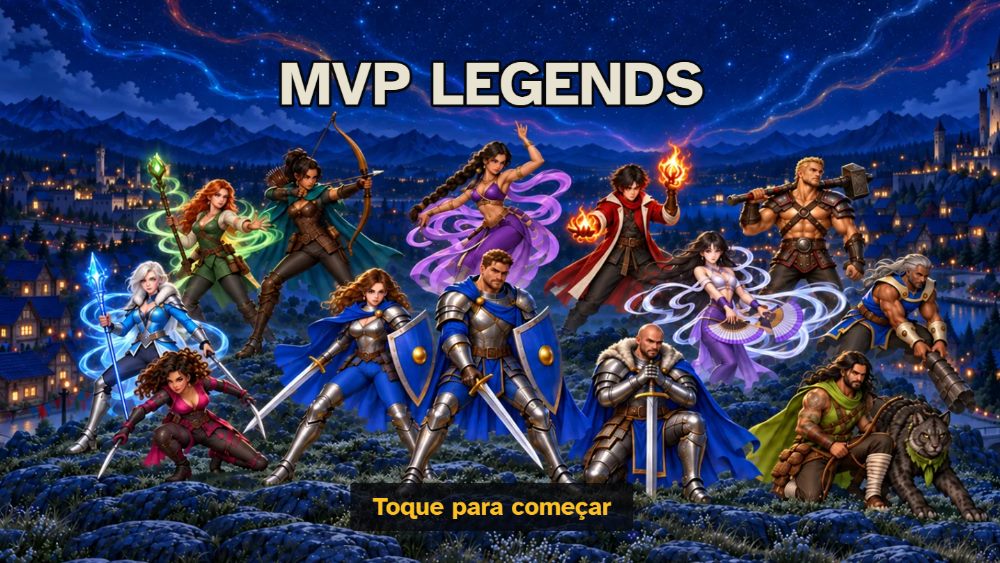
Where the studio came from: MVP Legends
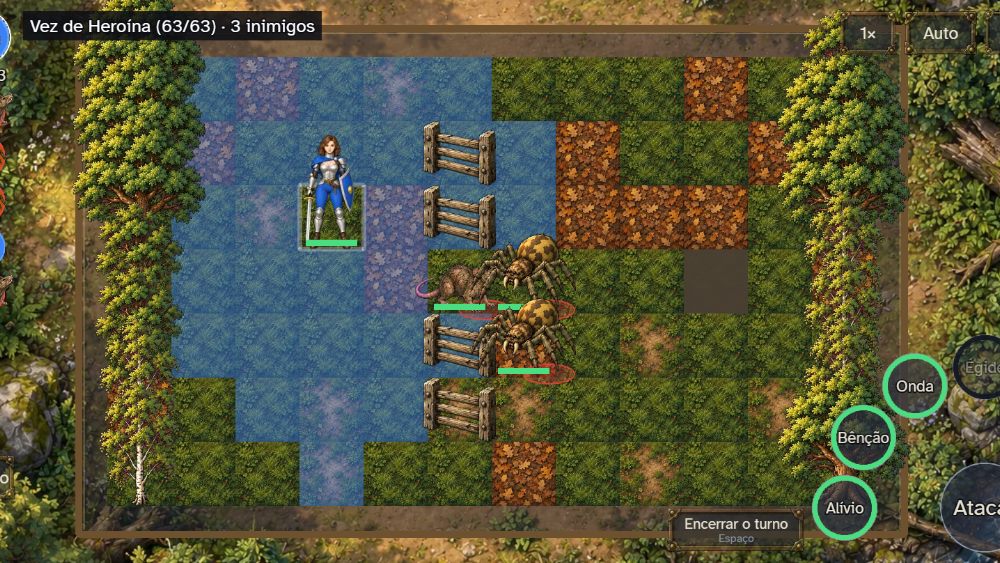
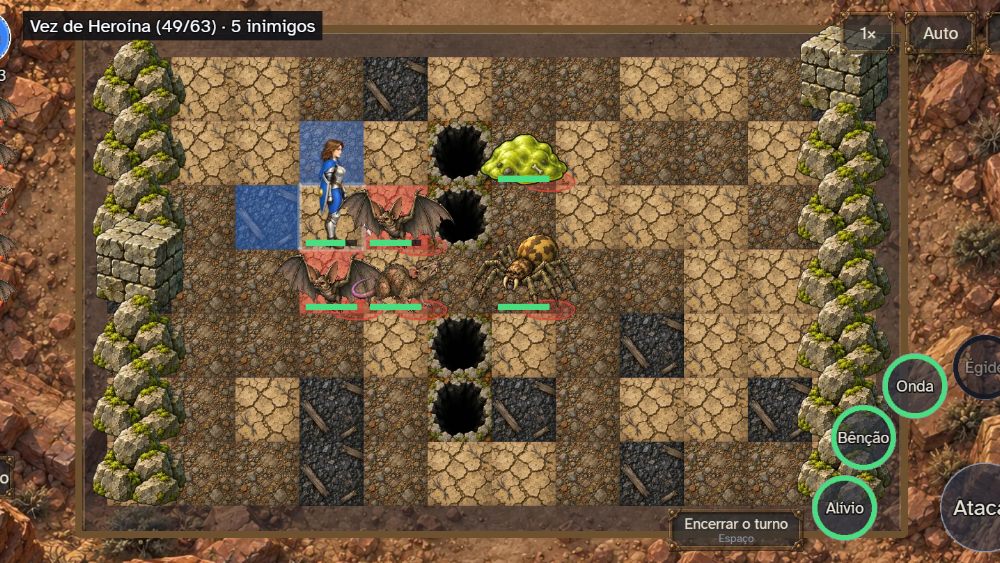
The studio's first game was playable in three weeks: a turn-based tactical RPG that mixed grid battles with JRPG and mobile-game ideas, in a world where the elements are disappearing.
Playing my own version showed me what to keep (the world, the story, the grid) and what to change. It mixed too many styles, and a small studio goes further when it picks a clear audience and a scope it can actually finish. I stopped, and took everything I'd learned into a more focused game: Legends SRD Tactics.
This version won't get any more updates. It stays online because it's part of the road.
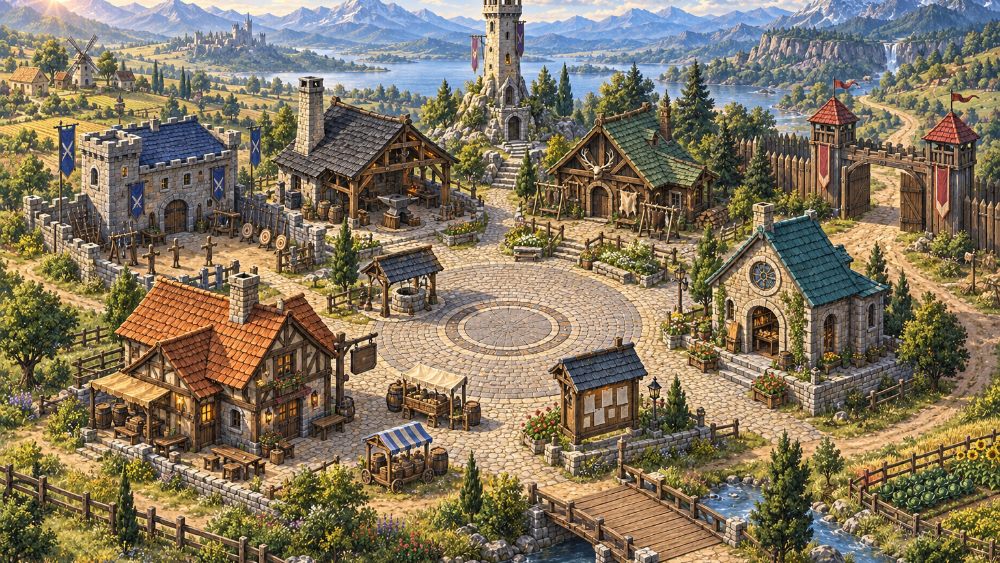
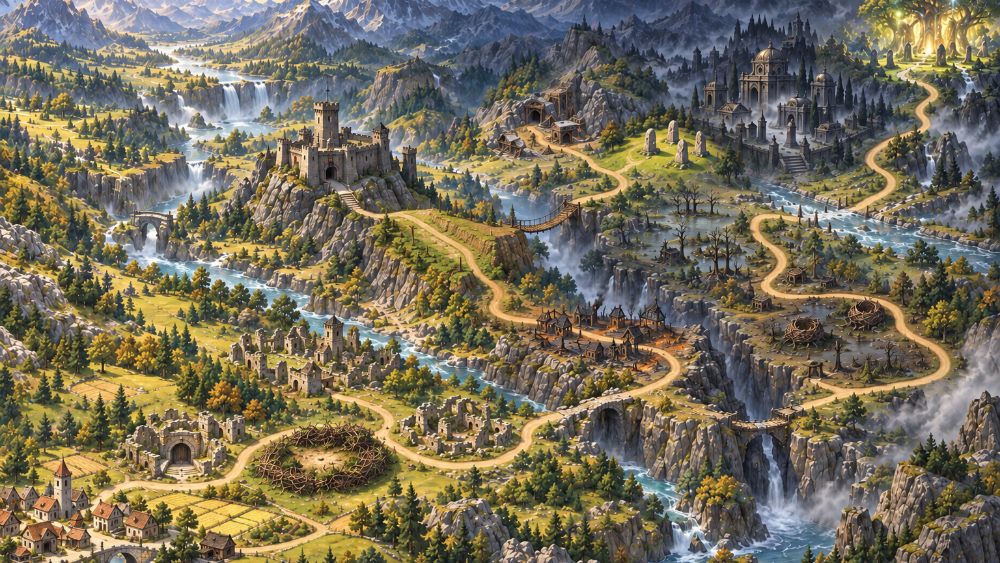
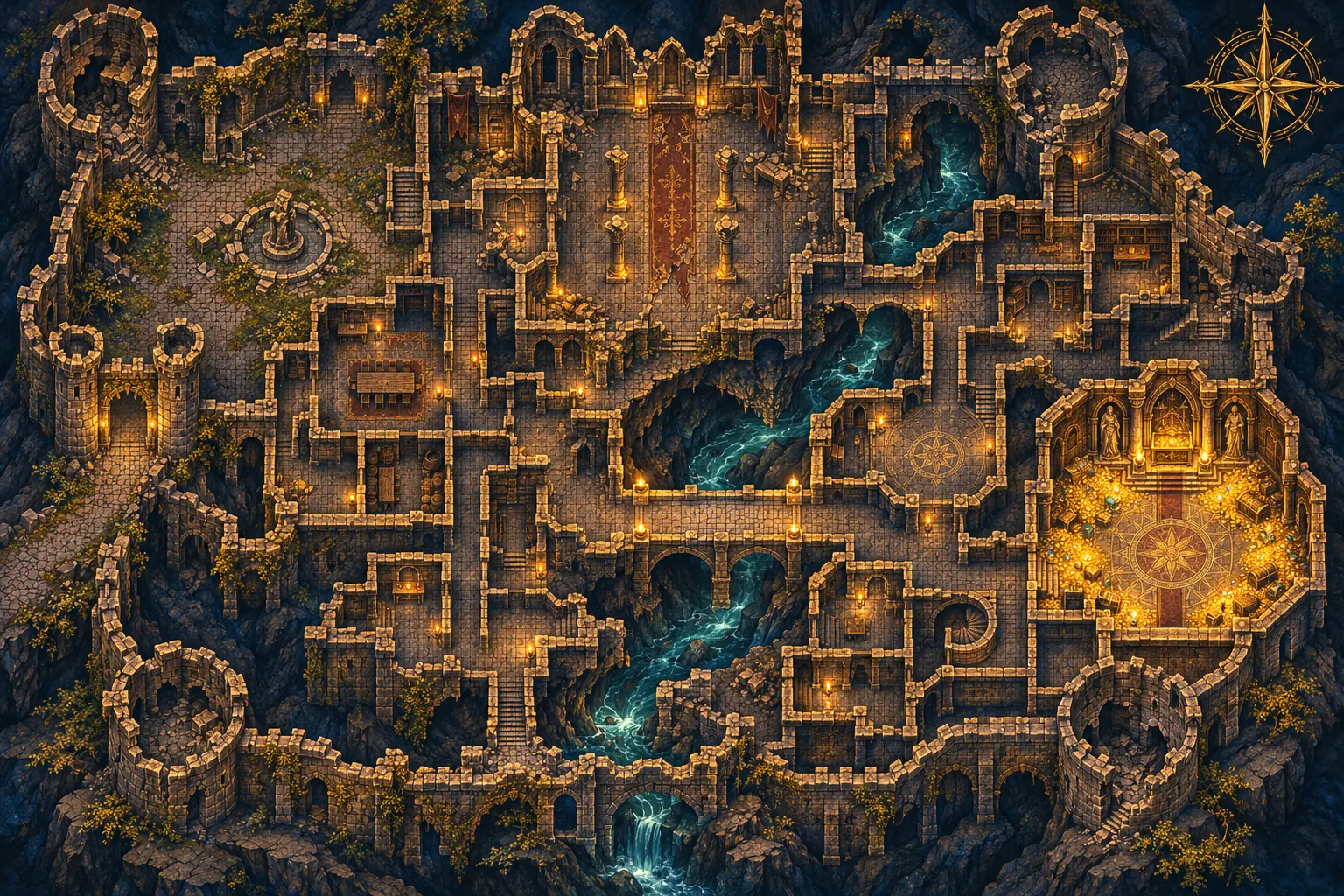
Follow it from the inside, or make your own
 Stream it, make videos about it
Content creators get every new version of Legends SRD Tactics before it's announced to the public, a ready-to-record kit, and a direct line to me.
 Learn to make your own game with the studio
The same road that took this game from a notebook to the browser became the First Playable Mentorship: in under 60 days, the game in your head becomes a prototype of about 15 minutes that any friend can play in the browser, with me beside you at every step. The first group is open, with 5 spots.
The full synopsis and the behind-the-scenes are coming to the devlog
The history of the world, the decisions behind each version, and the mistakes along the way. Drop your email and I'll let you know when a new post goes up.