

Every version, straight from the dev
This is where I share what goes on inside the studio: what went into each version of Legends SRD Tactics, what worked, what didn't, and what players asked for. Without hiding where things really stand.
Newest first
 Devlog 17 · November 16, 2026 · Legends SRD Tactics, pre-alpha 0.1.1My cleric lost 4 AC because of a paintingTap to read
In the last devlog, I showed how a hero is made before stepping onto the board: the sheet in images, the wizard's 16 outfits, the paladin's 49 drawings. Today's topic is what happens when the rules sheet and the painting don't match.
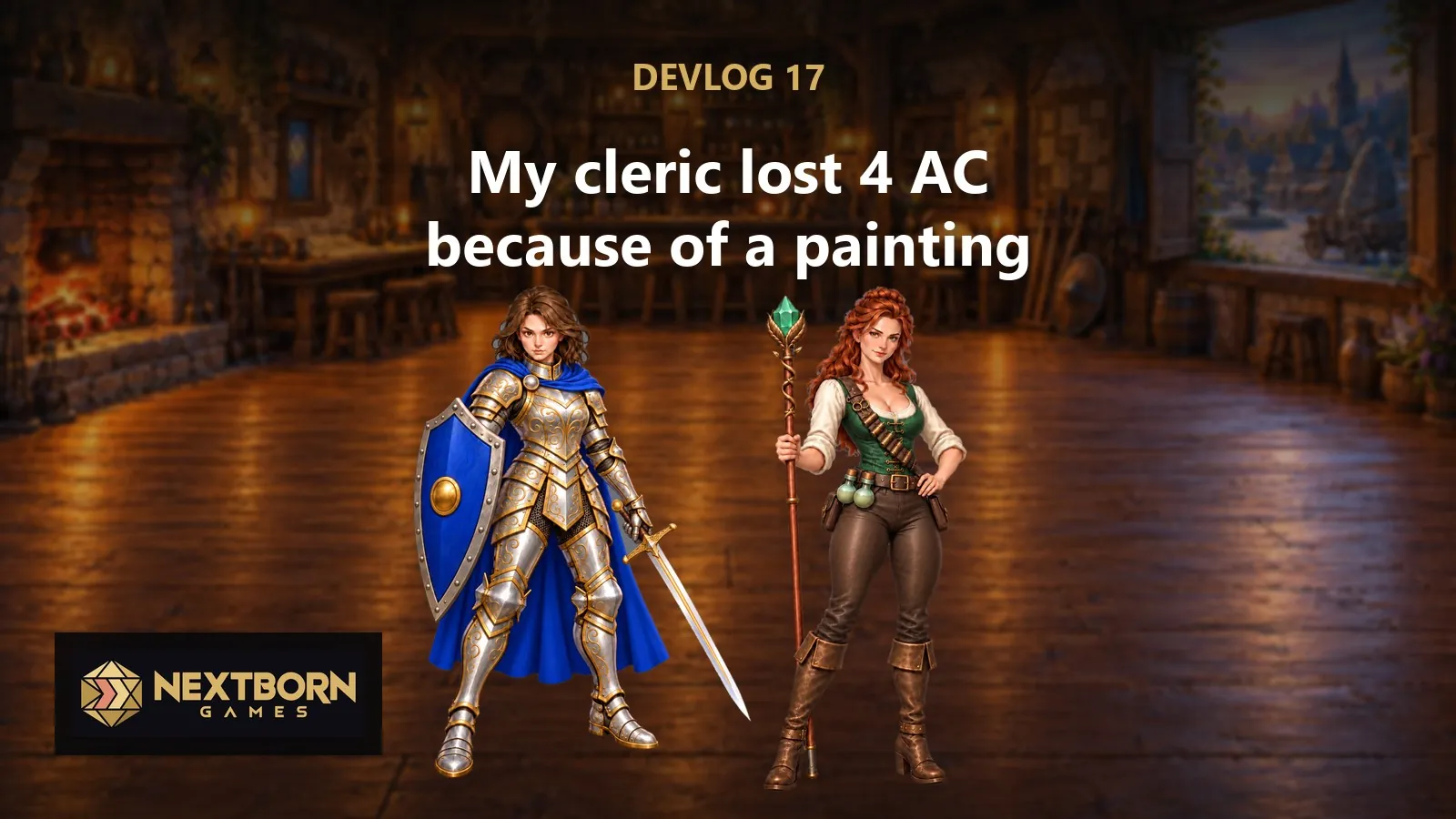
In early October, I locked what each hero in the first act has at levels 1 and 2: weapons, spells and powers, all taken from the SRD 5.2. On the sheet, the Captain, the party's paladin, fought with a hammer, and her strike pushed the enemy back. The Healer, the cleric, followed the Protector order, which grants heavy armor: with her shield, she reached AC 18.
Then I took stock of the art. The Captain was already painted with a longsword and a shield. The Healer, with a staff and leather, and no shield at all. The rules said one thing, and the painting showed another.
I had two ways out: repaint both, or change the rules. Repainting meant redoing, frame by frame, a look I had already approved. So the rules changed, and the art stayed.
The Captain traded the hammer for a longsword, with the Sap mastery: whoever she hits has disadvantage on their next attack. The push didn't disappear, because it's still in the SRD's Shove action, which every hero has. The Healer traded the Protector order for the Thaumaturge, and her Strength and Dexterity swapped places, so the leather would hold up better. Her AC dropped from 18 to 14.
That was the price I accepted. The Healer got more fragile and moved to the back line, healing from a distance, which was already her role. And the extra cantrip the Thaumaturge grants barely matters in battle.
If you're making your game, compare the art with the rules before you lock either one. When they clash, ask which one costs less to change, and whether the change still serves the character's role. Here, the new rule served just as well.
Pre-alpha 0.1.1 is live and free: play it here.
Until the next session.
 Devlog 16 · November 12, 2026 · Legends SRD Tactics, pre-alpha 0.1.1My wizard went through 16 outfitsTap to read
In the last devlog, I talked about how the game will teach the rules to people who have never played a tabletop RPG. Today's topic is different: how a hero is made before stepping onto the board.
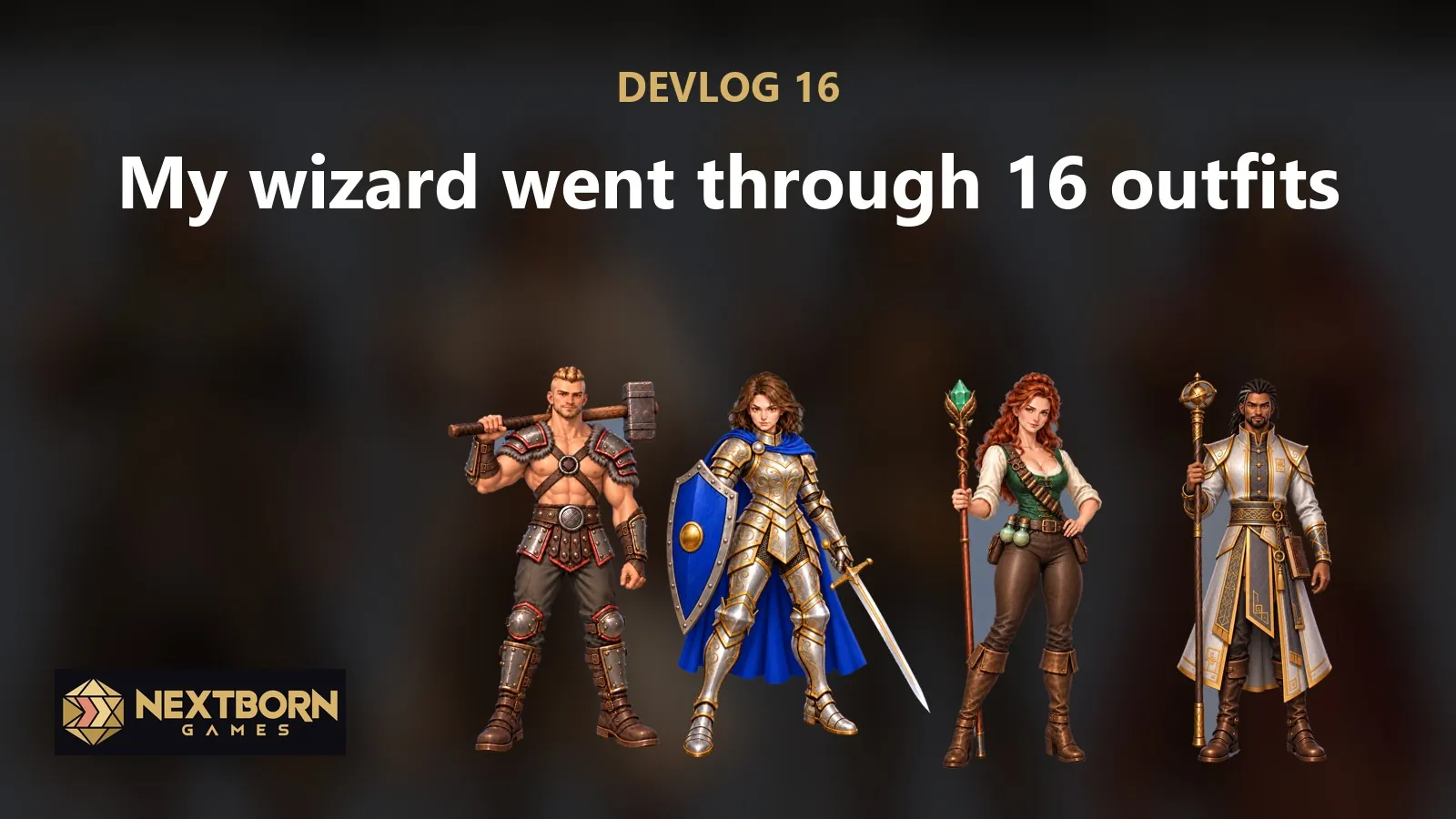
It all started with the Captain, the party's paladin. Before any animation, she got a full sheet in images: the face, the armor, the sword, the shield, the body from the front and from the back. Each piece was approved one by one, and every mistake became a rule for the next heroes. One example: in the first paintings, a rim light left a yellowish halo in her hair that carried over from image to image. Since then, every hero gets front lighting, no rim light.
That sheet became the Heroes' Bible, and every character goes through it.
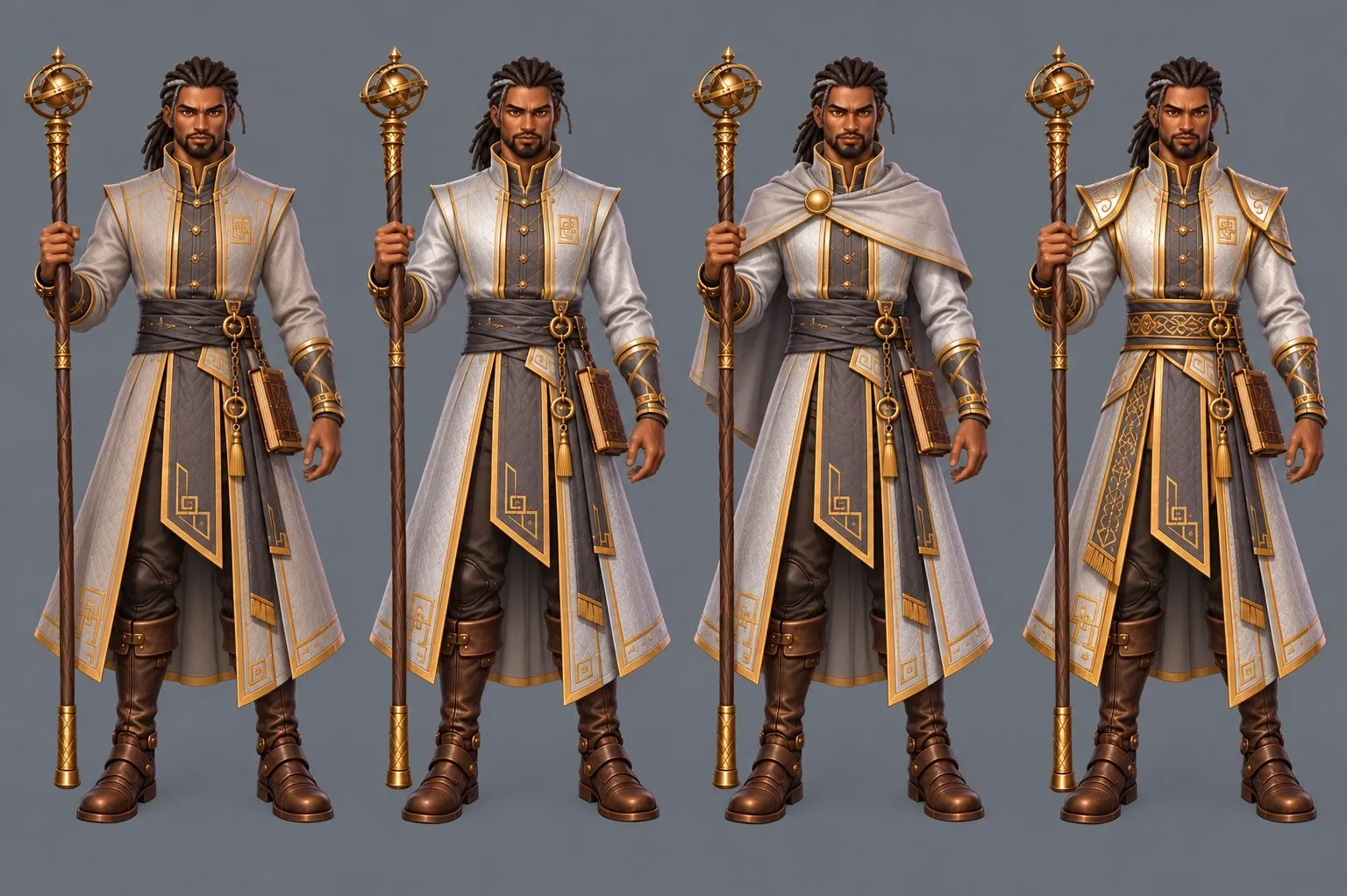
The Engineer, the party's wizard, was the hardest one. The first four outfits followed the Captain's style, and I didn't like the colors. Eight more came, with no blue, green or purple. The last one got four variations. I chose the gold one with pauldrons. That's 16 outfits before the official one.
And the sheet is just the start. To walk and fight on the board, the Captain has 49 drawings: idle, four steps, four attack frames, two spell frames, getting hit and falling, in four directions. Almost every tactics game mirrors a character when they turn around, to save work. But the Captain is left-handed, and the mirror moved her sword to the other hand. So each direction has its own painting.
If you're making your game, lock the character sheet before you start the animations. One wrong detail on the sheet repeats in every frame after it.
Pre-alpha 0.1.1 is live and free: play it here.
Until the next session.
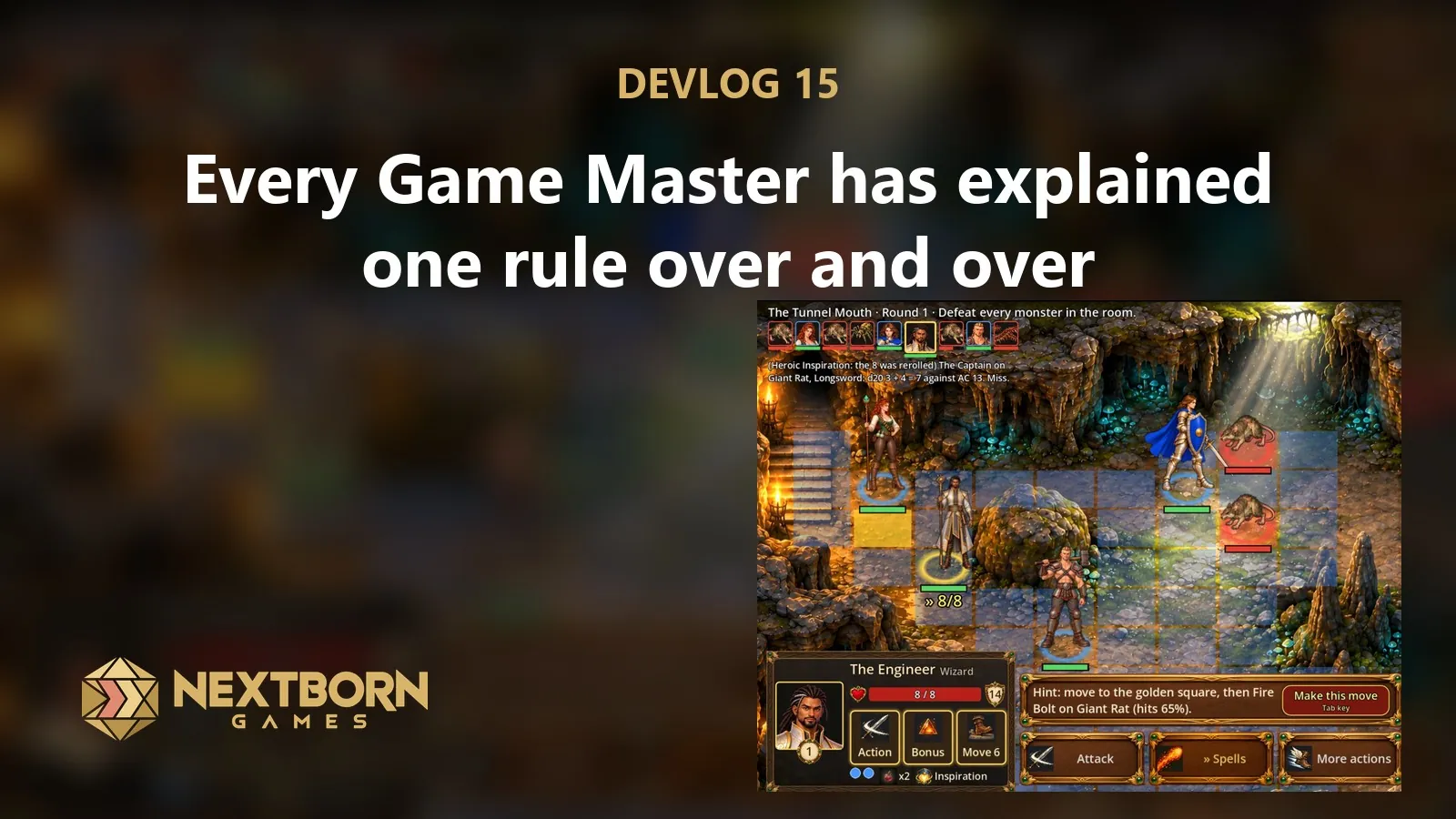 Devlog 15 · November 11, 2026 · Legends SRD Tactics, pre-alpha 0.1.1Every Game Master has explained one rule over and overTap to read
In the last devlog, I told you why the game's heroes are still painted in 2D. Today's topic is the player who comes to the game without ever having played a tabletop RPG.
At the table, the Game Master solves this by talking. They explain advantage, the bonus action, armor class, and explain it again when the rule comes back at the wrong moment. A game has no GM beside you. If a rule never shows up, new players get stuck; if every rule shows up at once, on a screen before you play, people who already play get tired and skip it.
So, on October 13, I decided how the game will teach. When you start the Adventure, it will ask: do you already play tabletop RPGs? Answer "I know how to play" and you go straight to the fight. Answer "Teach me" and you will learn the rules inside the battles of the first act, one at a time, right when each one matters, in the voice of one of the heroes. Every roll will have a "why?", and a Rulebook will gather the rules the game uses. You will be able to change your answer in the options.
The idea was inspired by XCOM 2, which asks at the start of a campaign if you want the tutorial. The difference is that here the lessons live inside the battles themselves, not in a separate part.
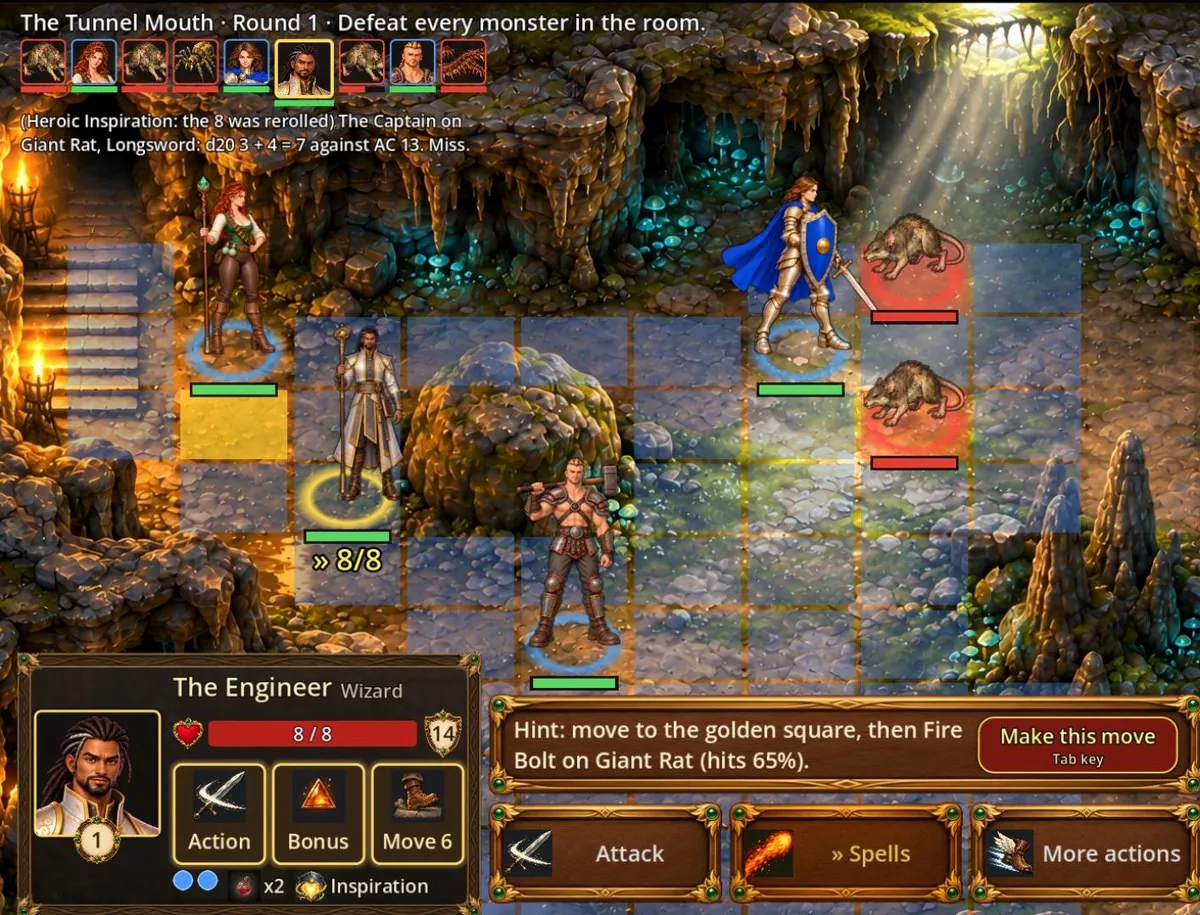
This is still in progress: the lessons aren't in the pre-alpha yet. What's live today is the Hint. On each hero's turn, the game shows the whole turn, step by step, with your chance to hit, like "Fire Bolt on Giant Rat (hits 65%)". One tap makes the move. If you don't want help, turn it off in Options.
At your table, who taught you to play?
If you're making your game, teach each rule when it's useful, not on a screen before play. People who already know keep going; people who don't learn by playing.
The pre-alpha is live: play it here.
Until the next session.
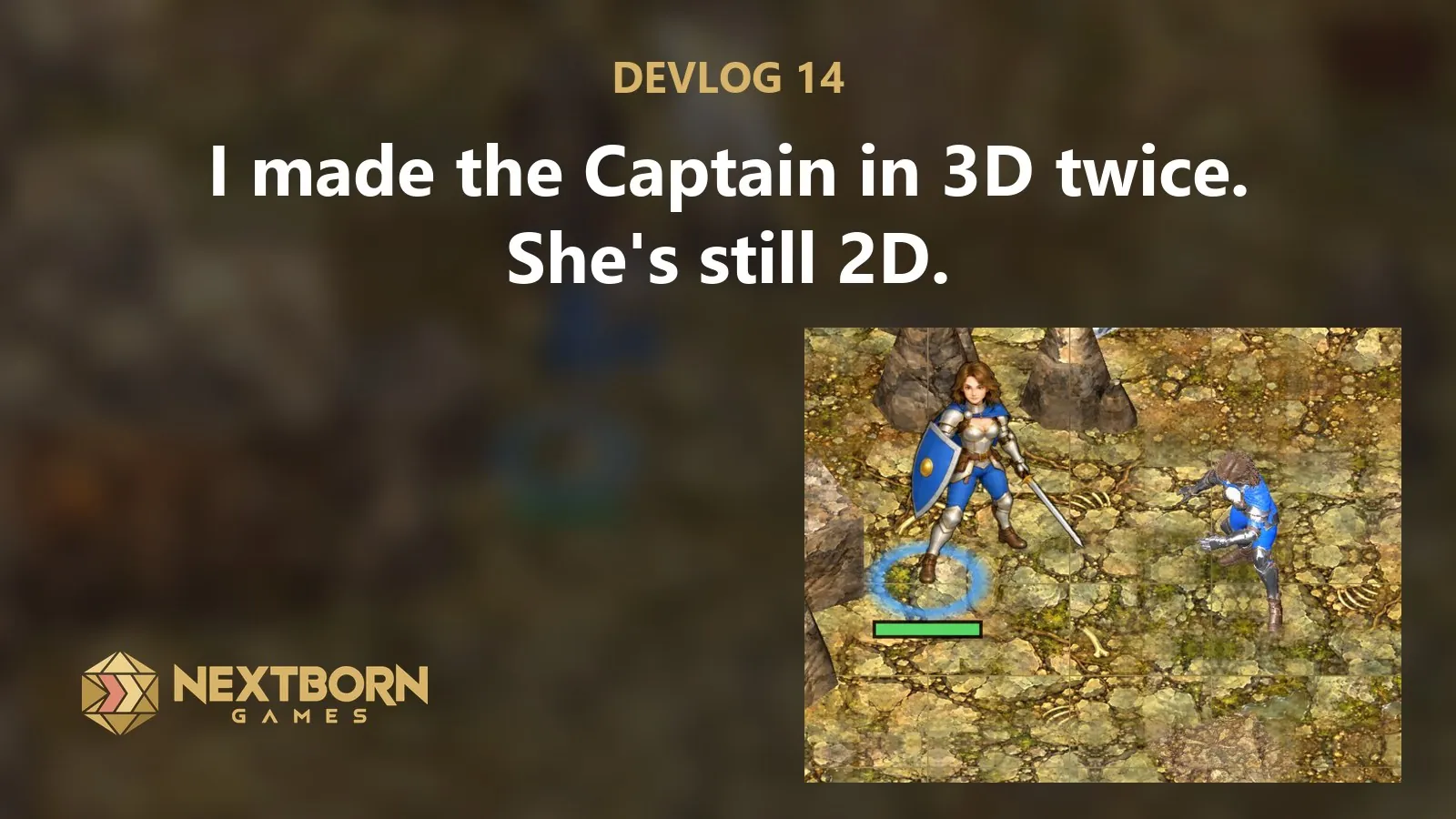 Devlog 14 · November 10, 2026 · Legends SRD Tactics, pre-alpha 0.1I made the Captain in 3D twice. She's still 2DTap to read
In the last devlog, I told you why the first round of a fight now belongs to the heroes. Today's topic is how the characters look.
At the RPG table, a hand-painted mini has a charm a plastic one doesn't. In the game, the question was different: would the heroes stay painted in 2D, or move to 3D? I tested it twice, with the Captain, the party's paladin.
The first attempt, on October 6, took seven versions of the model. The face and armor came out decent, but the animation wasn't good: the ready-made moves belonged to a generic figure with no sword or shield. Fixing it would mean animating bone by bone. And with the camera looking down, the 3D Captain looked smaller and thinner than the painted one.
Mixing doesn't work either: a 2D hero next to a 3D monster looks like two games glued together. Games that blend both, like Octopath Traveler, keep every character in the same style.
The second attempt, on October 12, went much better. The Captain got a front and back drawing, arms out, and the model came out with free legs, solid armor and the drawn face following the head. Nine animations worked. Still, doing that for every hero and every monster was too much work for a first game.
Decision: the first game ships in 2D. The 3D work is shelved, with everything I learned, for the next game. One idea I'm keeping, inspired by Dead Cells: using 3D as a pose base for the painted frames.
One thing from the test is going into the game: the Captain's new design, with light steel plate, gold trim and a long blue cape. She'll come in painted, in 2D, later on.
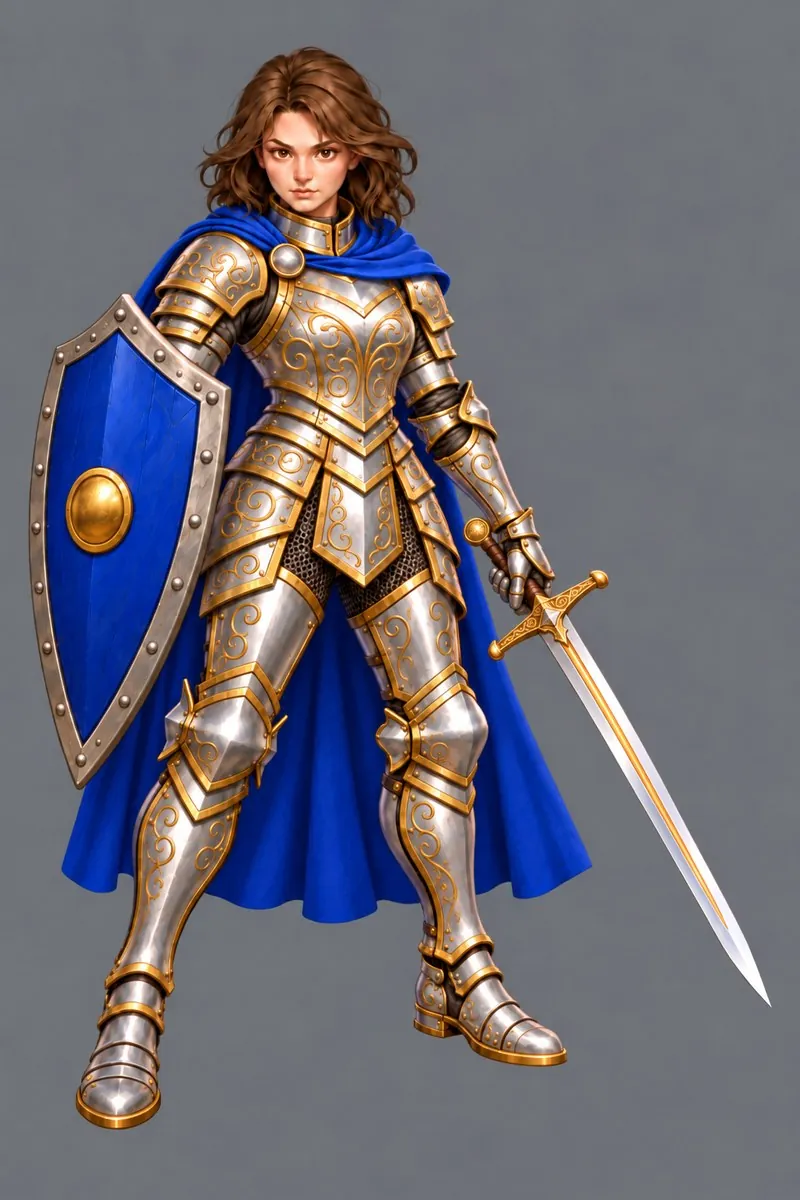
In the tactical RPGs you play, do you prefer painted or 3D characters?
If you're making your game, test the character style with a single character before building the whole cast. One figure is enough to show how much work lies ahead.
Pre-alpha 0.1 is live and free: play it here.
Until the next session.
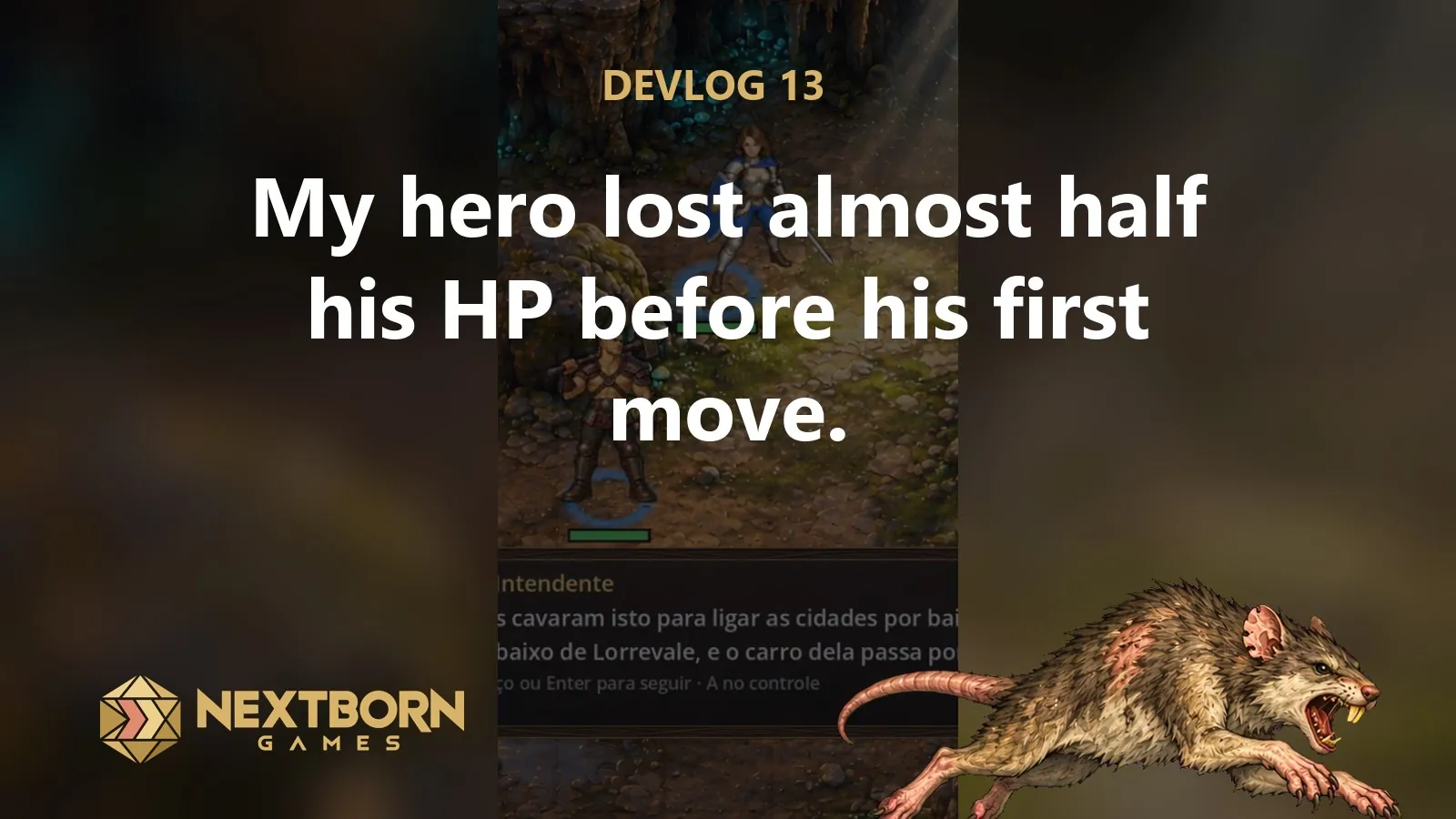 Devlog 13 · November 9, 2026 · Legends SRD Tactics, pre-alpha 0.1My hero lost almost half his HP before his first moveTap to read
In the last devlog, I told you why every damage roll in the game now shows its math. Today's topic is the first round of a fight.
Anyone who plays RPGs knows the scene: the GM calls for initiative, the monster rolls higher than everyone and hits someone before the party moves a finger. At the table, that's sometimes part of the game. In the first fight of a video game, it's just annoying.
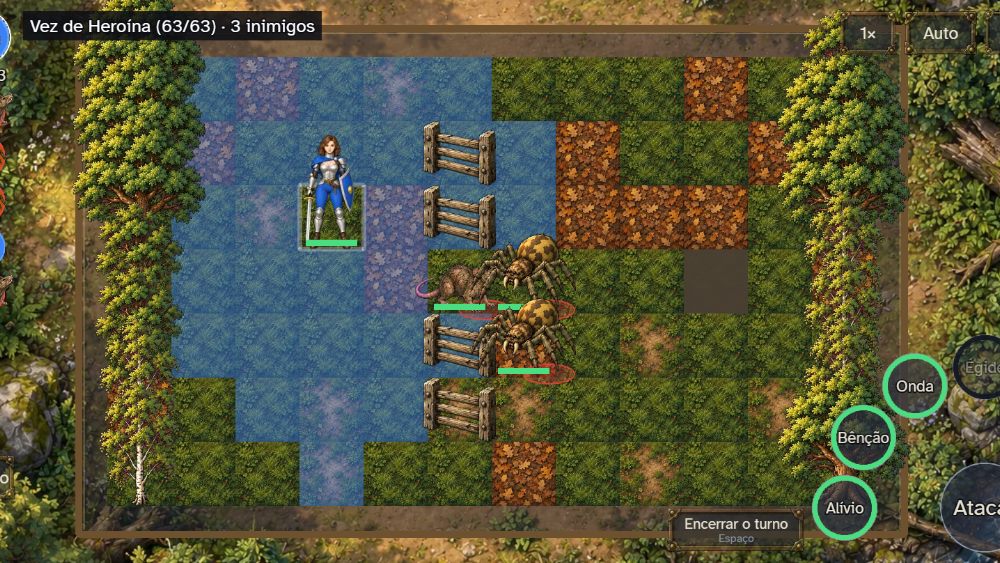
That's what happened when I played the Tunnel Mouth, the game's first room. The rats started 5 to 7 squares from the heroes, and a rat moves 6. When one of them won initiative, it moved and bit right away. The Believer dropped from 14 to 8 HP, and I hadn't made a single decision yet.
The new rule applies to every room: from the starting positions, no monster, moving as far as it can, reaches a hero. Monsters that move 6 squares start 8 away; those that move 8 start 10 away. The rat can still win initiative, but in round 1 it can only close in. The first round is yours: position the party, shoot from range, set up the spell.
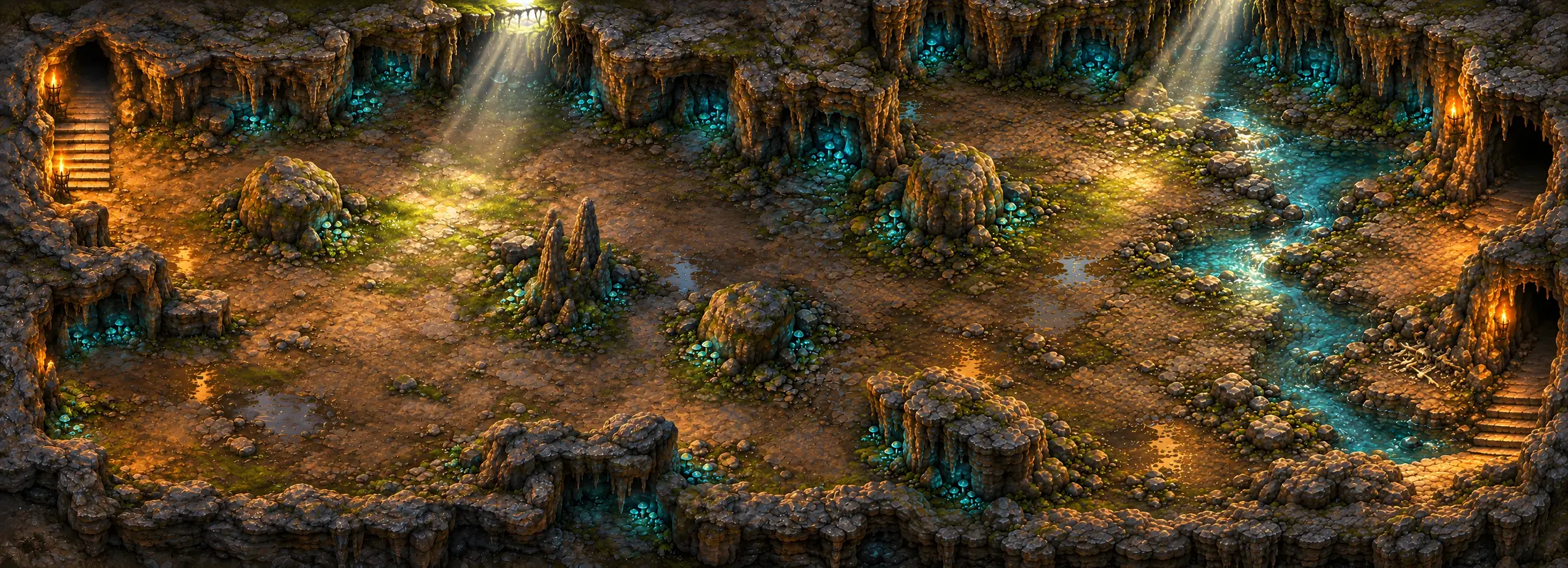
In the same change, the Tunnel Mouth stopped being a rectangle. The wall juts into the room, and the middle narrows between the rocks before opening into the stream hall. Now there's room for round-1 positioning to matter.
The idea was inspired by XCOM 2, where the squad starts concealed on most missions and picks when to strike, and by Fire Emblem, which shows how far each enemy can reach before you move.
This is already in pre-alpha 0.1, live now.
At your table, can the group get hit before they act?
If you're making your game, look at the first round of the first fight. That's where players decide whether the game is fair to them.
Pre-alpha 0.1 is live and free: play it here.
Until the next session.
 Devlog 12 · November 8, 2026 · Legends SRD Tactics, pre-alpha 0.2 (in testing)At the RPG table, nobody accepts "trust me"Tap to read
In the last devlog, I told you why every hero in the game got a new name. Today's topic is something every game master knows.
At the table, when the GM says "the rat bites you, 7 damage", someone always asks what the die showed. Nobody takes the number without seeing the math. Anyone who has run a game, like I did from age 12 through my teens, knows that question.
In my game, the combat log already showed the d20 math: the roll, the bonus and the target's AC. Damage didn't. It just said "10 damage", and the player had to trust it.
And there was a worse case. When the target had resistance, the log wrote the full hit, not the half that went through. Kolvar in a Rage takes only half damage from weapon hits, but the log showed the full number. His HP went down correctly; the written math was wrong.
Now all damage shows its math. A longsword hit reads like this: "7 damage (1d8 + 2: 5 + 2)". On a critical, the dice double and the bonus is added once. With resistance, the line says "resistance: half", and the number is the damage that went through. Rage, the spider's poison and Divine Favor are in the math too.
Damage that doesn't come from a weapon hit got its own line as well. Magic Missile and Sacred Flame used to just pop a number on screen, with nothing in the log. Now each one shows its math, and a target that saves sees "saved: half". Magic Missile writes one line per dart.
The idea was inspired by the combat log in Baldur's Gate 3, where the damage math shows up when you hover over it. Here it's written out directly, so you don't have to look for it.
This goes into the next version, pre-alpha 0.2, which is in testing. The pre-alpha 0.1 that's live still shows only the total.
So, when you play, do you check the GM's math or trust the number?
If you're making a game with dice, show the math. People who can check the math trust the result, even when the hit misses.
Pre-alpha 0.1 is live and free: play it here.
Until the next session.
 Devlog 11 · November 7, 2026 · Legends SRD Tactics, pre-alpha 0.1The heroes in my game changed their namesTap to read
On October 10, every hero in the game got a new name, and so did the Intendant and both cities. Until the day before, the pre-alpha build online still had the old ones: Adra, Brás, Inês and Nestor in the guard, Elio as the Intendant, between Vilar Novo and Granaries. Today they are Maelis, Kolvar, Merewen and Edrimon, with Tavian as the Intendant, between Ostremar and Lorrevale.
The old names worked, but they didn't feel like a world of their own. Brás and Inês sounded like my neighbors in Brazil, and Vilar Novo and Granaries like any fantasy town. In English, the cities didn't even keep the same name as in Portuguese.
The new names follow two rules. They're made up, and I searched each one against games, books, shows and tabletop RPGs. They're the same in Portuguese and in English, so players in any language call a hero the same way.
The search cut real names. Two from the backup list were dropped: Harrek is already Harrek the Berserk, from the tabletop RPG RuneQuest, and Berenger is almost Berengar, a witcher from the first The Witcher.
And there was a change inside the change. Once the names were in, I noticed three ended in "-var": the capital Caldevar, Kolvar, and the engineer Lodovar. Read together, they sounded the same. Only Kolvar stayed, and on the same day the capital became Ostremar and the engineer became Edrimon.
Even so, these names are provisional. I picked a direction so the project wouldn't stall waiting for the perfect name, and the final ones will come when the game grows and the story asks for them. Brida the Sergeant and Mira, for example, still have their old names for now.
So, which of these names would you change?
If you're making your game, give it a placeholder name and keep going. When it's time to change it, search every name first and read them all out loud, side by side.
Pre-alpha 0.1 is live and free: play it here.
Until the next session.
 Devlog 10 · November 6, 2026 · Legends SRD Tactics, pre-alpha 0.1I'm inside my own gameTap to read
In the last devlog, I told you why the game now opens in a tavern. If you tapped the people in the hall, you may have noticed a bald, bearded man at the back of the hall. That's the Philosopher. And he has my face.
In the story, the Council of Twelve made Tavian the Intendant by seven votes to five, and he promised the Great Sharing. The five who voted against asked for someone to go with the guard and write down what happens, not what people say happened later. On the first page of his notebook, he wrote: "That someone is me."
It makes sense to me. I ran tabletop RPGs from age 12 through my teens, and the game master is the one who follows the party and tells the story as it happens. In the game, I don't fight or give orders. I walk along and take notes.
The notebook lies open on the table, with handwriting and the sound of a turning page. The first four pages tell of the world, the tunnels, the guard and the departure. Then there's one page per room, and those are written from your run: how many rounds the fight took, who fell and got back up, and, in the last room, who brought down the Dire Wolf. In the recording for this devlog, the first room took 2 rounds, and nobody fell. In the other recording, it took 3 rounds, and Kolvar fell and got back up. Everyone reads a different notebook.
The Philosopher also asks more than he states. Five of the seven pages carry a question he asks himself, about what the ancients wrote or what the stone keeps. That keeps the story open, without him giving away what comes next.
The notebook is there for people who skipped the dialogue. In the tavern, Esc skips the conversation, and anyone who did that can read the story later, at their own pace. The idea was inspired by the journal in The Witcher 3, narrated by the bard, and the journal in Baldur's Gate 3, which changes with your choices.
For now, the Philosopher has my face. It may stay that way, or it may change before the game is finished. And I'd like to know what you think: should the dev stay in the game or go?
If you're making your game, think about an optional text that reacts to what the player did. A page written from their run is worth more than a long scene everyone watches the same way.
Pre-alpha 0.1 is live and free: play it here.
Until the next session.
 Devlog 9 · November 5, 2026 · Legends SRD Tactics, pre-alpha 0.1My game opened straight into a fightTap to read
In the last few devlogs, I talked about combat: the room that made the game lose 40 times, the hit that killed, and the die that missed. Today is about what comes before it.
Until early October, you picked a mode and dropped straight into the first room. Four heroes, a bunch of creatures, and no idea who those people were or why they were there. The fight worked, but nobody cared who went down.
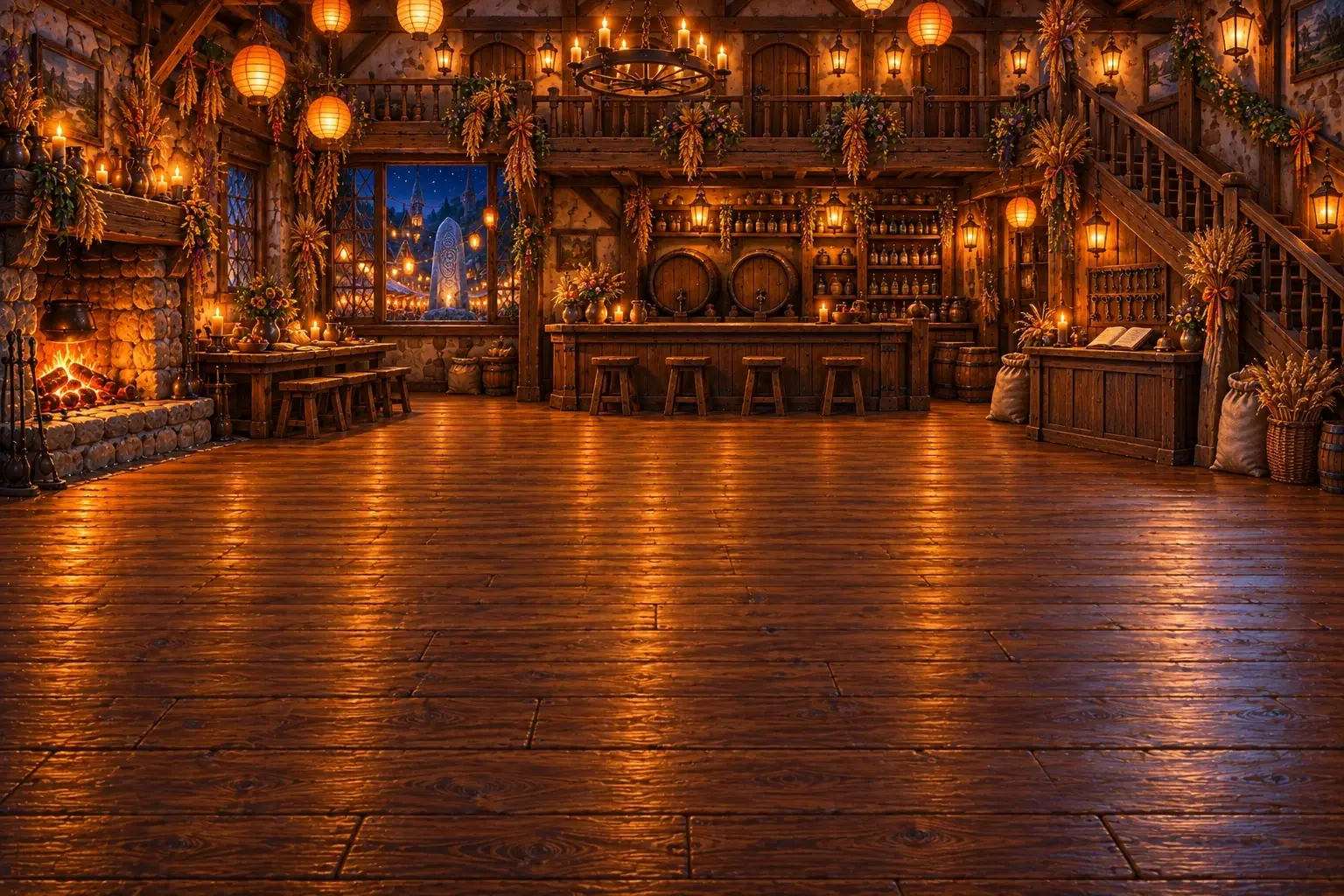
So the game started opening in a tavern. It's Ostremar, before dawn: the town is still asleep, and the tavern on the square has opened only for the guard. The Intendant says the anchor is already at the tunnel mouth, hands out Healing Potions, and the Captain says that, before going down, everyone sorts out what they carry.
After the conversation, the hall opens up. You tap someone and they talk, like in the hall of the first playable version of MVP Legends. Sergeant Brida tells you to check the sheets, with the spells, the weapons and how much each one can take. The Philosopher says he'll write down everything that happens. Each hero has a line, and those lines change with every mission. Whenever you're ready, you press "Into the tunnel".
The tavern also closes the act. The tunnel leads to the town of Lorrevale, and the guard goes up to the inn on the night of the feast. Mira, at the foot of the stairs, asks if you want to end the night. That's the SRD long rest: it restores everything, and the guard levels up. So the act starts in one tavern and ends in another.
I was careful about one thing: opening an RPG by explaining the world is one of the most common complaints about the genre. People want to play and get a lecture instead. That's why the opening conversation is short, each line says who a person is through what they do, and anyone can skip it all with Esc.
A lot is still provisional. Everyone's names, from towns to people, may change. And, for now, the tavern is a hall where you tap and talk.
If you're making your game, introduce your people before the fight, but without a lecture. One line about what each person does is enough to make the first fall hurt.
Pre-alpha 0.1 is live and free: play it here.
Until the next session.
 Devlog 8 · November 4, 2026 · Legends SRD Tactics, pre-alpha 0.1My hero had a 65% chance. And missed.Tap to read
In the last devlog, I told you how Healing Potions saved the heroes from dying in a single hit. Today's topic is the other side of the die: missing.
In the game, attacks follow the SRD rule: you roll a d20, add your bonus and compare it to the target's AC, which is how hard it is to hit. A natural 20 is a critical hit, and a natural 1 always misses. With a 65% chance, you miss about once every three attacks. At the table, that's part of the fun. On a screen, missing three times in a row makes you want to close the game.
My first idea was to change the rule. I looked at grazes, like in Pillars of Eternity: an attack that misses by a little still deals half damage. I gave up on it, because the hit rule holds the whole game together. If almost every attack deals something, armor loses its value, the hero who soaks up hits loses their role, and anyone who plays D&D finds a strange version of a rule they know by heart.
I also thought about a bonus only in the test version, a +2 "blessing" to miss less. I dropped that too, because a test version that's easier than the game turns into the complaint "the version I played was different".
So the rule stayed as it is, and the frustration was handled by difficulty, with three modes inspired by the ones in Baldur's Gate 3:
- Explorer: everyone, heroes and enemies, gets +2 to attacks and spell DCs; enemies have 30% less HP, and heroes have double. You miss less, and the fight forgives.
- Balanced: pure SRD 5.2, the rules as at the table.
- Tactician: enemies get +2 to attacks and spell DCs, and 25% more HP.
Two more things help in every mode. The first is the preview: before each attack, the game shows the full math, "d20 +5 against AC 13: 65%", so you know what you're risking. The second is the dice: the d20 comes out of a shuffled bag with the numbers 1 to 20, and the next number comes from that bag until it's empty. The average stays the same, but long streaks of misses become much rarer.
If you're making your game, before you change a rule everyone knows, see if difficulty can solve the problem. The rule stays the same for people who know it, and newcomers get a way in.
Pre-alpha 0.1 is live and free: play it here.
Until the next session.
 Devlog 7 · November 3, 2026 · Legends SRD Tactics, pre-alpha 0.1A single hit could kill a heroTap to read
In the last devlog, I told you how auto mode lost 40 times in a row and what I changed in the flooded gallery. After that fix and a few others, it was already clearing the first act 35 times out of 40 on Balanced. One thing was still wrong, and the number didn't show it.
At level 1, a good roll could take a hero out in one hit. The Engineer starts with 8 HP and AC 11. The Dire Wolf's critical hit, in the den, deals up to 23. Across the 40 test runs, 19 heroes died.
I didn't want someone's first experience with the game to be watching a hero die with nothing to do about it. On Balanced, the idea is that you get through it battered.
The shortest path was to make the creatures weaker or give the heroes more HP. I left both alone and looked for the answer in the SRD rules themselves.
Every hero now goes down with Healing Potions, which heal 2d4 + 2: 3 on Explorer, 2 on Balanced and 1 on Tactician. The Intendant hands them out in the tavern. Drinking one, or giving it to an adjacent ally, even a fallen one, only takes a bonus action, as in the 2024 rules. Leftover potions carry over from one room to the next.
Auto mode also learned to help: the fallen hero with the most failed death saves gets help first, from whoever is closest and can reach them that turn.
And I changed one rule. In the SRD, if the damage left over after you hit 0 HP equals or exceeds your maximum HP, you die on the spot. That now applies only on Tactician, the mode for people who want the full tabletop rules. On Explorer and Balanced, a hero always falls and rolls death saves.
In the next test, Balanced went from 35 to 40 wins out of 40, and deaths dropped from 19 to 2. On Tactician, from 21 to 31 wins, and deaths from 25 to 9. The creatures are the same.
If you're making your game, look at what the player can do before you touch the enemy. A hard fight becomes fair when people have a way to respond.
Pre-alpha 0.1 is live and free: play it here.
Until the next session.
 Devlog 6 · November 2, 2026 · Legends SRD Tactics, pre-alpha 0.1My game lost 40 times in a rowTap to read
In the last devlog, I told you why the game moved to the SRD rules. Ready-made rules solve a lot, but they can't tell you if your battle is fair. I only found that out by testing.
I had auto mode play the entire first act, 40 times in a row, on Balanced. It lost all 40.
Auto mode plays worse than a person, so that number wasn't the game's grade. Even so, it showed me where the problem was: the second room, the flooded gallery. The party arrived with no magic left, and 8 creatures were waiting, with bats attacking in round one.
I remembered something simple: the first act is the first impression. People who are just starting need to be able to get through it.
I cut the gallery to 4 creatures and also removed creatures from the other rooms. The lost XP came back as a reward for clearing the room, so the party levels up at the same pace. And, as in Baldur's Gate 3, anyone who falls gets back up with 1 HP after a won battle.
In the next test, auto mode won 26 out of 40 on Balanced. The room stayed hard, and now you can get through it.
If you're making your game, test the beginning many times before you build the rest. That's where people decide whether to keep going.
Pre-alpha 0.1 is live and free: play it here.
Until the next session.
 Devlog 5 · November 1, 2026 · Legends SRD Tactics, pre-alpha 0.1Why I stopped inventing a battle systemTap to read
Until now, I told the story of MVP Legends. From here on, I'll show the new version of the game and explain, one devlog at a time, the decisions that led to it. I'll start with the biggest one: the battle system.
I was looking for the perfect system. I put together math from several games and ended up with 25 acronyms on a level 1 hero's sheet. It worked in tests, but it was too complex.
Meanwhile, the system I wanted already existed. The 5th edition of Dungeons & Dragons is the rules base of Baldur's Gate 3 and Solasta, and plenty of people already know and like it. Part of those rules is open for any game to use, with credit: the SRD.
Adopting the SRD solved two problems. The rules arrived ready, and players enter a battle already recognizing how everything works. That lets me spend my time on what only this game has: the story and the world.
That's where the name came from: Legends, from the old game; SRD, the rules; Tactics, the genre. It's still temporary, and the final name comes later.
If you're making your game, the lesson is simple: invent only what makes your game different.
Pre-alpha 0.1 is live and free: play it here.
See you next session.
 Devlog 4 · October 31, 2026 · MVP Legends, original versionThe mistake that cost me my first gameTap to read
I said Devlog 3 was the last one about MVP Legends, but I still had to show you the towns. I drew towns, maps and taverns nobody had seen. They're in this video.
They also show the size of the mistake. I planned 168 levels before the first 15 minutes were good, and every tweak touched everything. The game became playable in 3 weeks. 3 days later, I stopped.
The new game started with those 15 minutes.
If you don't want yours to end like this, come make your game with me. Only 5 seats for now: see how it works.
In the next one, I'll tell you what changed in the game and why it's called Legends SRD Tactics.
See you next session.
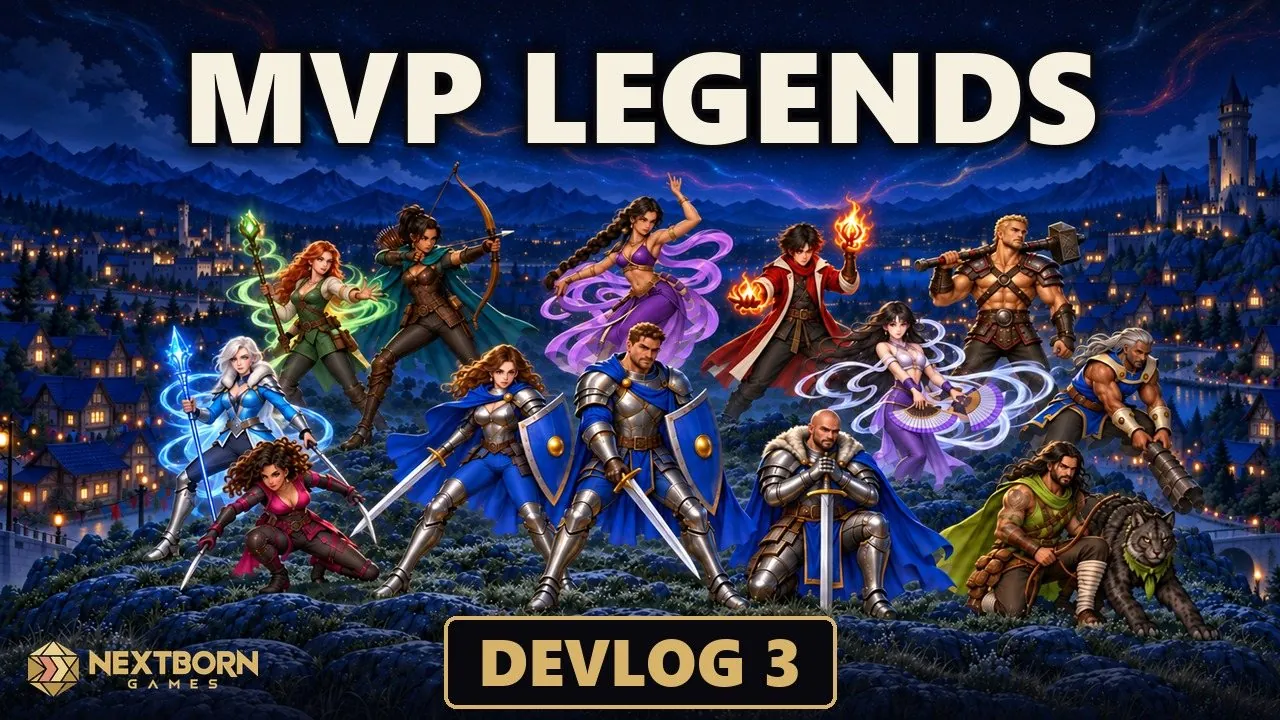 Devlog 3 · October 30, 2026 · MVP Legends, original versionThe name that was never a nameTap to read
When I started the first game, I had the story and the idea. I didn't have a name, and I didn't want to stop and decide on one before I saw the game running.
So I called it MVP, short for minimum viable product: the smallest version you can already test. Legends came in because it was the most generic name that fit a game about heroes, and heroes in an RPG end up as legends. It was meant to be temporary. It ended up staying.
Inside, that temporary name carried a system that was anything but temporary.
The search for the perfect system
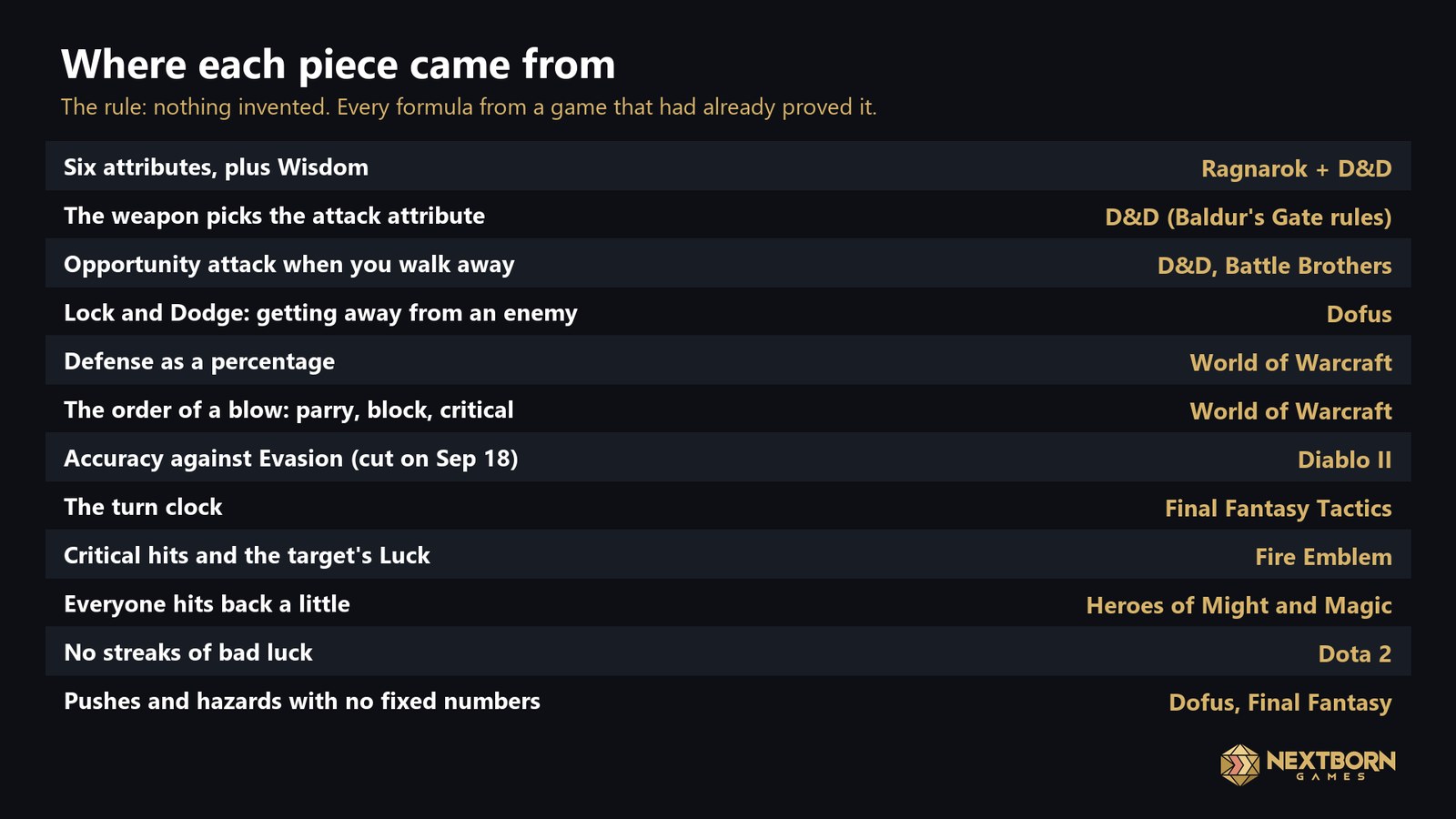
On September 10, I designed the attributes of MVP Legends with one rule: nothing invented. Every formula had to come from a game that had already proved it works, because the plan was to reach level 200 without patching anything.
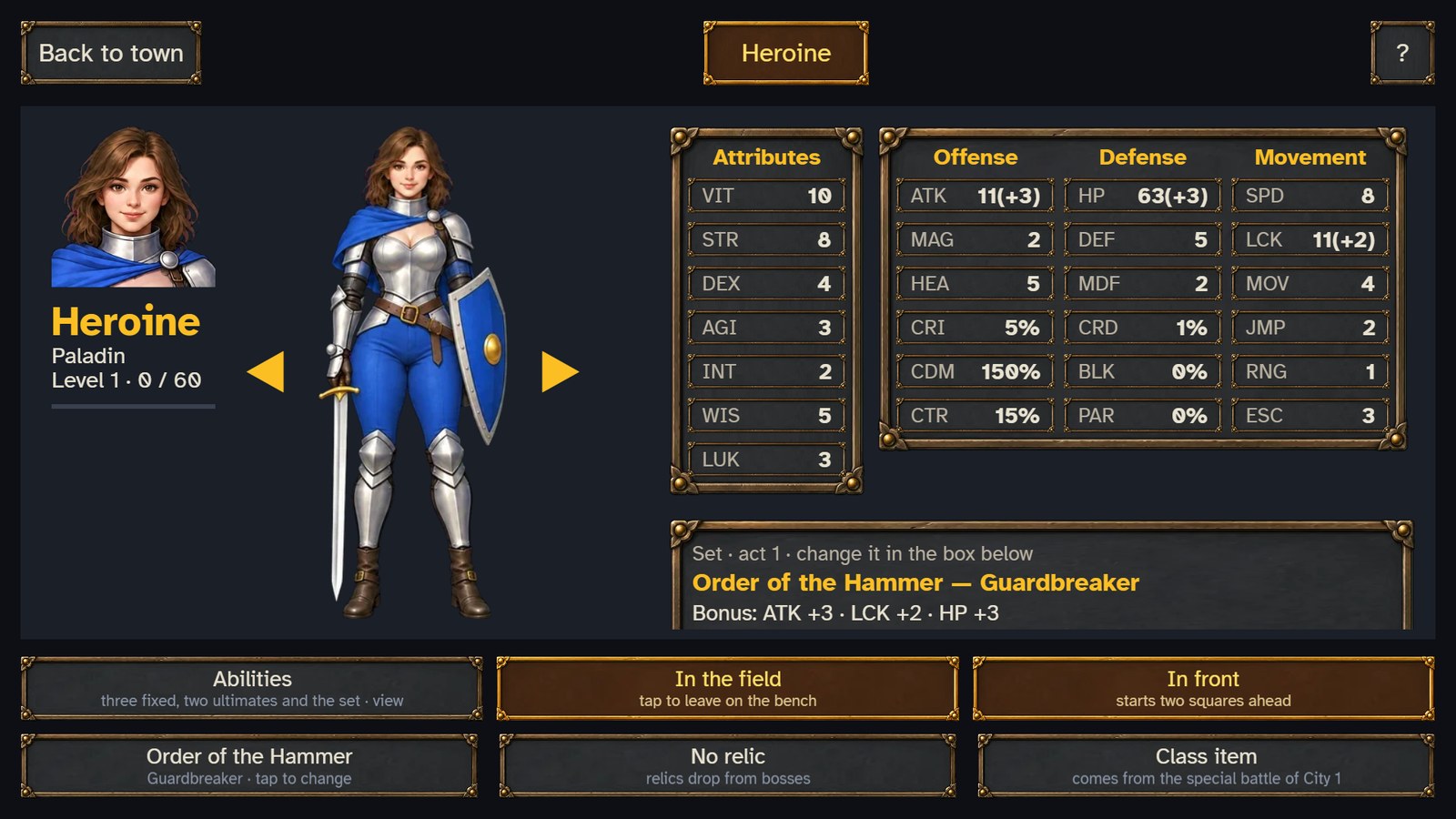
Seven base attributes grow with level: Vitality, Strength, Dexterity, Agility, Intelligence, Wisdom and Luck. They generate the numbers the battle reads. The sheet in the photo shows the 18 that stayed, split into attack, defense and movement. There were 20: Accuracy and Evasion were cut eight days later.
Then I put the pieces together. Six attributes carry Ragnarok's names, and Wisdom came from D&D. D&D also gave me the rule that the weapon picks the attack attribute, the same rule set behind Baldur's Gate. Lock and Dodge, which decide how far you can walk after touching an enemy, use Dofus's formula. Percentage defense and the order of a blow (parry, block, critical) came from World of Warcraft. Accuracy against Evasion, from Diablo II. The turn clock, from Final Fantasy Tactics. Critical hits against the target's Luck, from Fire Emblem. The draw with no bad-luck streaks, from Dota 2.
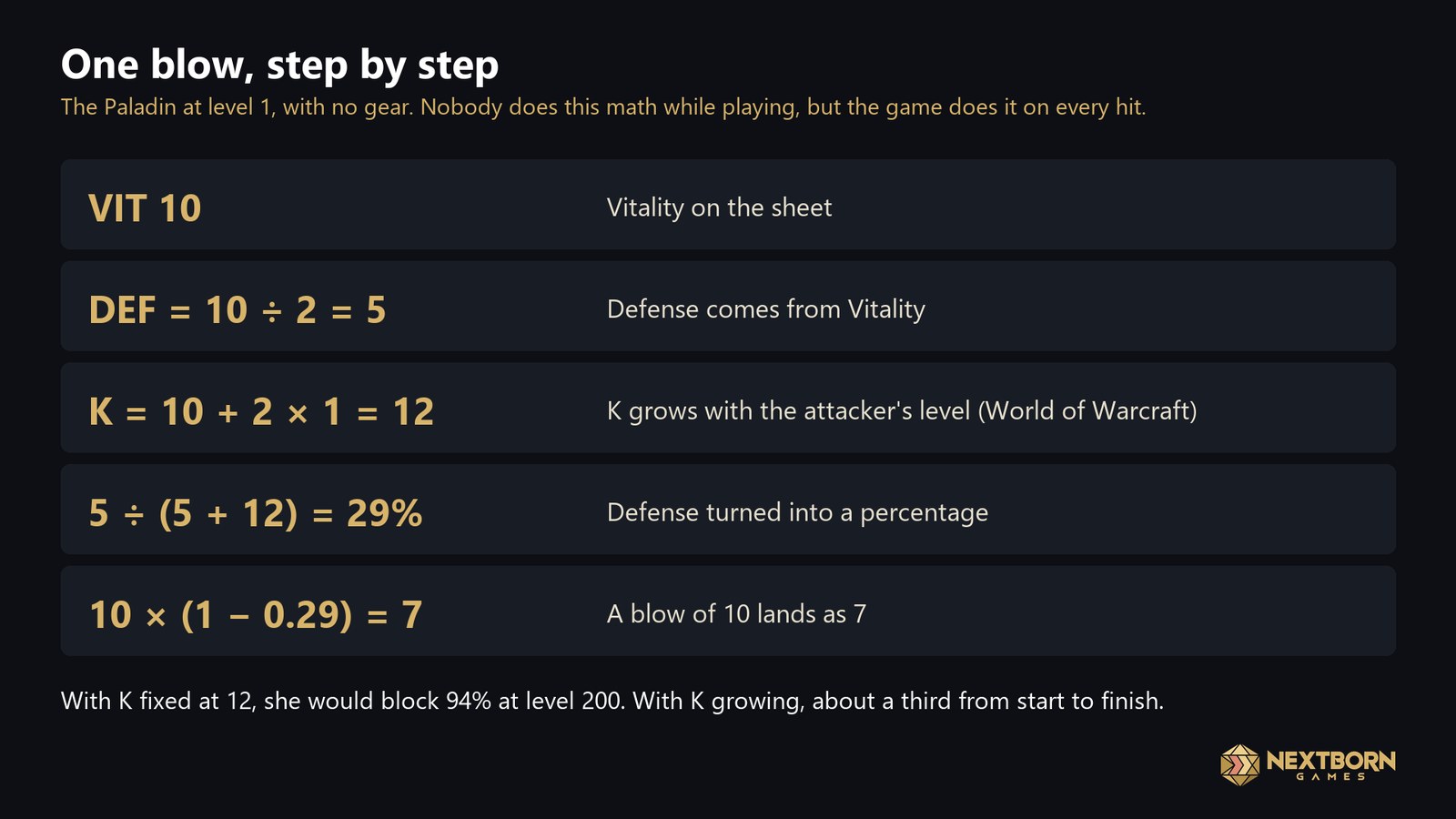
To see how the math worked, take one blow on the level 1 Paladin. Vitality 10 gives Defense 5. That Defense becomes a percentage against a scale that grows with the attacker's level: 5 ÷ (5 + 12) = 29%. A blow of 10 lands as 7. With the scale stuck at 12, she would block 94% of every blow at level 200. With it growing, she blocks about a third from start to finish.
Each formula, on its own, made sense and had a game to prove it. Together, they meant 25 acronyms on the sheet of a level 1 hero. It worked in tests, and it was too complex.
On YouTube, at @nextborngames, you can see all 14 levels start to finish, with the sheet and the math in the middle. This is the last devlog about MVP Legends.
In the next one, I'll tell you what changed in the game and why it's called Legends SRD Tactics, a name that is also still temporary.
See you next session.
 Devlog 2 · October 29, 2026 · MVP Legends, original versionThe 168-level mistakeTap to read
In the last devlog I promised to talk about Legends SRD Tactics. Before that, I need to tell the part that was left out of the first post, because it explains almost every decision that came after. It's the mistake that has cost me the most time at the studio so far, and one that almost everyone who starts making games makes: building the whole game before knowing whether the first minutes work.
When MVP Legends became playable, I didn't stop at the first 15 minutes. I already had the whole world in my head, and I planned the full campaign: 168 levels, in 12 acts of 14. It felt like the natural path. If the beginning was standing, I just had to keep building.
And I did. I built 63 levels, in 3 acts of 21, a 24-floor tower and 12 heroes, each with their own character sheet. I put it all online and tested up to 2 hours of play in a row.
What went wrong
The cost showed up when it was time to adjust. A tactical game lives on balance: how hard a hero hits, how much a monster can take, how many turns a battle lasts. With 63 levels built, every tweak to an early level changed the pace of all the others. I'd change one thing and have to run the game again to see what had broken further ahead.
Soon I was spending more time checking what each tweak had broken than making the game better. Worse: the first 15 minutes, the ones that decide whether someone keeps playing, still weren't good.
What I learned
The first 15 minutes are worth more than the next 2 hours. If they don't hold people, nobody reaches the rest, and everything built after them becomes weight: more to adjust, more to break.
That's why Legends SRD Tactics was born with a different rule: first, 15 good minutes, tested with people who play. Playtest 0.1 is exactly that, about 15 minutes of play. The rest is only worth building after someone plays those minutes and asks for more.
If you're making your first game, here's the advice I'd give myself back in September: finish and test the beginning before planning the end. The big plan can wait. The first minutes can't.
What's next
In the next devlog, still MVP Legends: the battle system I built by mixing ideas from several games, with 7 attributes and 18 numbers for each hero. It worked in testing, and it still turned out too complex. A longer video comes with it on YouTube, with the 14 levels of the original version. In this devlog, the video shows clips of them, on auto at 2x speed. The original version is still online for anyone who wants to play, now in English too.
See you next session.
 Devlog 1 · October 28, 2026 · MVP Legends, original versionWhy I stopped MVP Legends and started overTap to read
This is the first Nextborn devlog, and it's late. The studio started almost two months ago, and I spent that time building the games and taking care of other studio projects, one of them for people who want to make their own game. More on that soon. So the first posts here cover what has already happened, in the order it happened, until they catch up with the present. I'll start at the beginning.
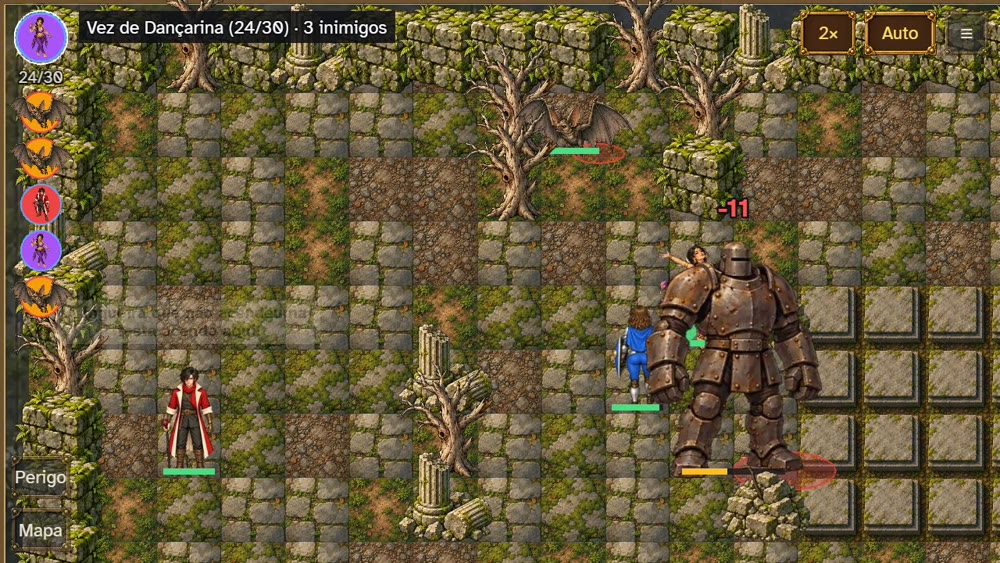
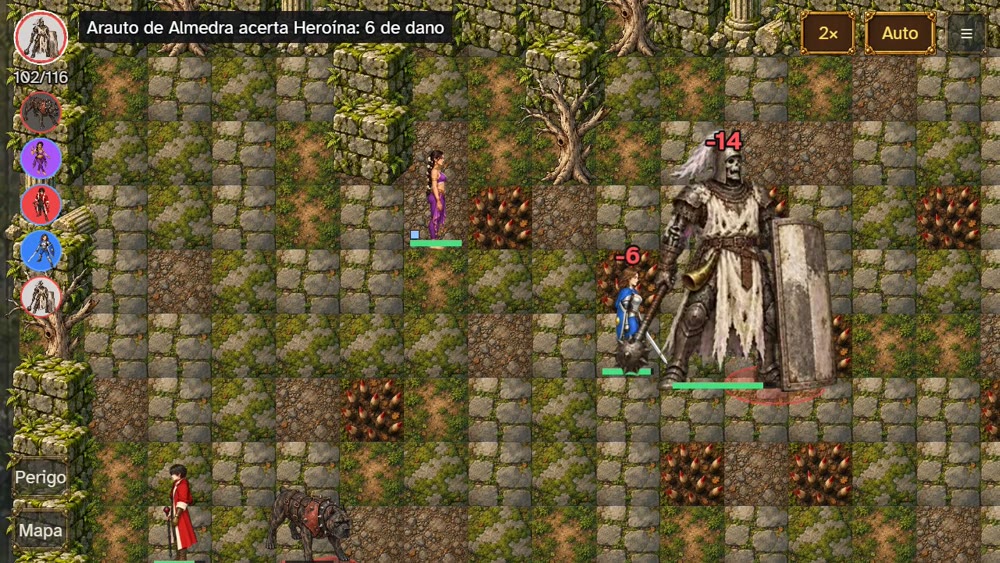
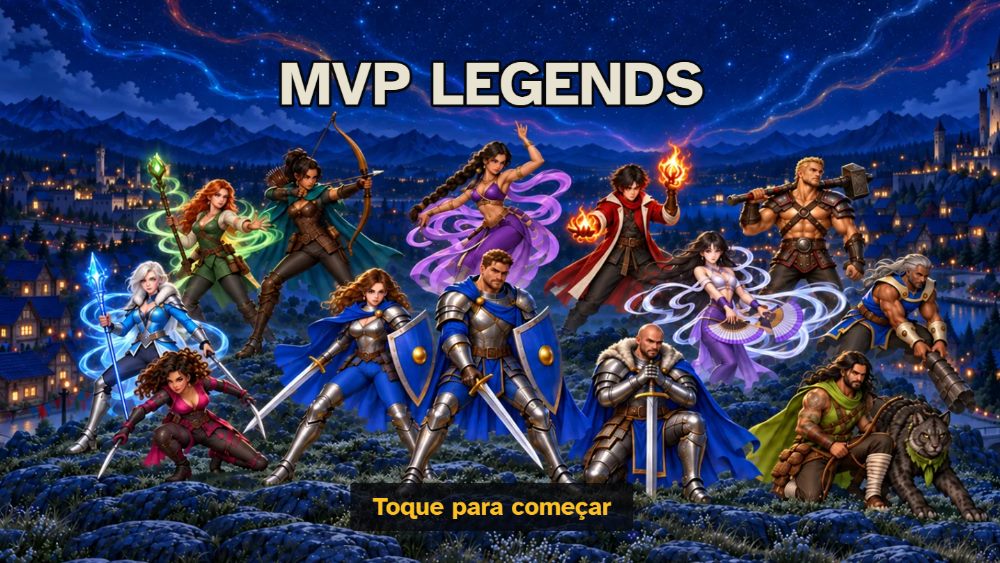
On September 4, Nextborn was a plan and a rules document. Three weeks later, MVP Legends had a first playable version in the browser: a turn-based tactical RPG that mixed grid battles, JRPG ideas and mobile game ideas, in a world where the elements are fading. I played my own build as a player. It was the best thing I did.
What went in
A first playable version from start to finish: heroes, grid battles, the journey across the map and the beginning of the story. It did what it had to do. And then a decision went in: stop, instead of patching.
What I learned
Playing the original version, I saw what I wanted to keep: the world, the story, the grid. And I saw what had to change: it mixed too many styles for a first game, and a small studio goes further when it picks a clear audience and a scope it can finish.
The audience became clear when I recognized myself in it: people who lost their RPG table to their schedules. The scope came with it: tabletop rules, a party of four heroes, a campaign in acts that each fit in one evening. I took the world and the story to that focused game, Legends SRD Tactics, and left the original version online, because it's part of the path.
For anyone making their own game, here's the lesson: play early. Let what you see while playing outweigh what you planned on paper. Those three weeks of MVP Legends taught me what no amount of planning would have.
What's next
In the next devlog, Legends SRD Tactics: how it grew out of what MVP Legends taught me, and how it reached the open playtest in the browser. MVP Legends won't get new versions. If you want to see where the studio came from, you can play the original version in the browser, on PC and mobile.
See you next session.
Get notified about new posts
Leave your email and I'll send you a link to every new devlog post. That's the only thing this list is for.